United Kingdom: Scaling Biochar for Carbon Removal under Net Zero Commitments
1. Overview
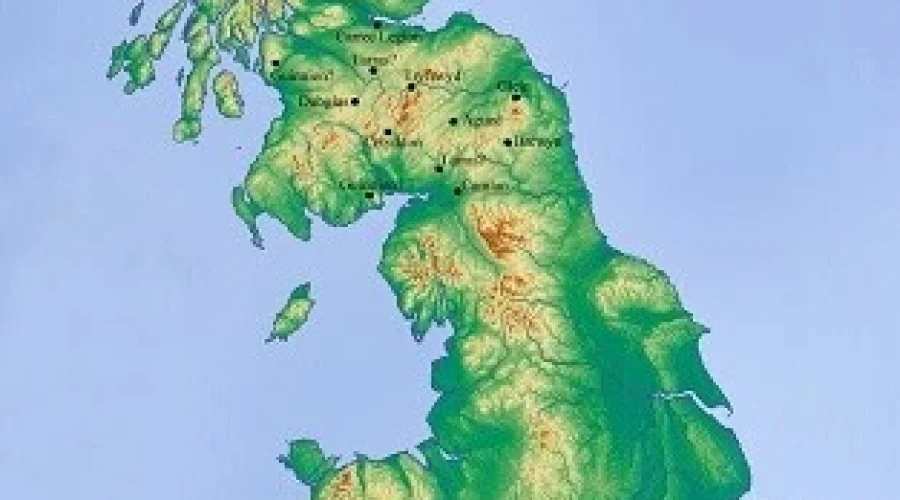
The United Kingdom, located in northwestern Europe, covers approximately 242,000 km² and has a population of around 68 million, resulting in a relatively high population density of 282 people per km². Land use is dominated by agriculture, accounting for roughly 72% of total land area—primarily permanent pasture and meadow—while arable land represents about 25% and forests cover less than 14%. The country experiences a temperate maritime climate.
Bioenergy plays a modest but growing role in the UK’s energy mix. In 2022, it contributed approximately 8.4% of total energy supply, with around 30% of biomass resources imported. Solid biomass has expanded significantly over the past decade, particularly in electricity generation through converted coal-fired power plants, accounting for about 11% of electricity consumption. However, fossil fuels still dominate heat and transport fuel demand, comprising over 90% of consumption in these sectors.
Estimates of biomass availability in the UK vary considerably due to methodological differences and uncertainties around imports. While some studies suggest up to ~32 million tonnes annually, government assessments indicate a more conservative range of 13–25 million tonnes. Within this context, biochar-specific feedstock potential is estimated at approximately 2 million tonnes per year.
Biochar represents one of the fastest-growing carbon dioxide removal (CDR) pathways in the UK. As of 2025, around 35 active biochar companies have been identified, making it the most represented CDR technology in the country. Despite this growth, the sector lacks a dedicated national biochar association, although organizations such as Carbon Gap actively advocate for biochar inclusion in emerging carbon removal frameworks.
2. Production
Biochar production in the UK is expanding through a combination of government-supported innovation projects and private-sector initiatives. Key developments have been funded by the Department of Energy Security and Net Zero (DESNZ) through the Direct Air Capture (DAC) and Greenhouse Gas Removal (GGR) Innovation Competition.
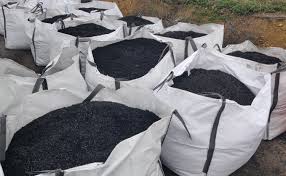
Notable projects include Black Bull Biochar, Invica Industries, Lapwing Energy, Ricardo, and Mersey Biochar. These initiatives vary in scale, feedstock type, and integration of energy systems, with most targeting agricultural applications and carbon removal markets. Some models, such as Lapwing Energy, emphasize decentralized, farm-based production.
A standout example is Ricardo’s Bioccus project, which integrates pyrolysis with carbon capture and energy recovery systems. The facility processes forestry residues to produce biochar, deliver surplus heat to local users, and capture process emissions for reuse in industries such as food and beverage manufacturing. This integrated approach maximizes both environmental and economic value.
Other active producers include Brodie Biomass and Carbon Hill Limited, which focus on smaller-scale, farm-integrated systems. One of the largest announced facilities is being developed by A Healthier Earth in Royal Wootton Bassett, with a planned capacity of 9,000 tonnes of biochar per year and an estimated carbon removal potential of 17,000 tonnes of CO₂ annually.
Despite increasing activity, total national production capacity remains unclear, reflecting the early-stage and rapidly evolving nature of the sector.
3. Applications
Biochar applications in the UK are diversifying beyond traditional agricultural uses, driven by innovation and startup activity.
Emerging applications include:
- Advanced materials: Companies such as Carbon Cell are developing biochar-based foams as sustainable alternatives to fossil-derived polymers.
- Waste management and energy systems: Carbogenics produces biochar from difficult-to-recycle organic waste and wastewater residues, targeting improvements in anaerobic digestion processes.
- Agriculture and fertilizers: Biochar Innovations is developing carbon-negative fertilizers to enhance soil health while delivering climate benefits.
These developments highlight a growing shift toward high-value, engineered applications of biochar across multiple sectors.
4. Research and Development
The UK has a strong research ecosystem supporting greenhouse gas removal technologies, including biochar, backed by significant public funding and academic collaboration.
The UK government has committed over £100 million to GGR research and innovation. Key programs include:
- DESNZ GGR Innovation Programme: Delivered feasibility studies and demonstration funding, including approximately £19 million allocated to biochar-related projects.
- UK Research and Innovation (UKRI): Through the Greenhouse Gas Removal Demonstrators (GGR-D) programme and the CO2RE hub, supports pilot projects and cross-sector research on scalable removal pathways.
- Live Labs 2 (DfT-funded): Develops low-carbon infrastructure materials, including biochar applications in road construction.
Leading research institutions include:
- The University of Edinburgh (UK Biochar Research Centre)
- The University of Nottingham (biochar demonstrator project)
- Aston University (pyrolysis and energy systems)
- UK Centre for Ecology and Hydrology and SRUC (soil and water remediation)
Additional initiatives such as the CO2RE Evaluation Framework and the Biochar Demonstrator programme are generating critical real-world data to support commercialization and policy development.
5. Policy, Frameworks, and National Strategies
The UK has established a strong legislative foundation for climate action through the Climate Change Act, which mandates net-zero greenhouse gas emissions by 2050. The framework includes legally binding carbon budgets that guide national emissions reductions.
Carbon removal technologies are expected to play a key role in achieving these targets. Government plans aim to scale engineered removals from 0.7 million tonnes per year by 2030 to over 21 million tonnes by 2035.
The UK’s Climate Change Committee (CCC) has emphasized the importance of carbon removal in offsetting residual emissions, particularly from hard-to-abate sectors such as aviation. While projections indicate that most removals will come from BECCS and direct air capture, biochar is recognized as a complementary solution.
However, policy support for biochar remains limited compared to other technologies. The UK Biomass Strategy focuses primarily on energy security and BECCS, with limited direct reference to biochar. In addition, the UK relies heavily on imported biomass, creating long-term uncertainty around feedstock availability.
6. Gaps, Challenges, and Opportunities
Gaps & Challenges
- Regulatory barriers: Biochar is often classified as a waste material under UK law, complicating production, transport, and application.
- Policy uncertainty: Limited clarity around long-term support mechanisms and perceived prioritization of other CDR technologies.
- Economic constraints: High capital costs, feedstock pricing, and lack of standardized MRV systems create challenges for scaling.
Opportunities
- Wastewater sector integration: Sewage sludge presents a large, underutilized feedstock with strong potential for biochar conversion, pending regulatory alignment.
- Cost-effective CDR pathway: Biochar has been identified as one of the more cost-competitive carbon removal options, potentially unlocking investment.
- Advanced system integration: Transitioning from incineration to biochar-based poly-generation systems could enhance energy efficiency and carbon benefits.
- Innovation leadership: Strong academic and industrial capabilities position the UK as a leader in developing integrated, high-impact biochar solutions.