India: Unlocking Biochar Potential in Agriculture and Energy Systems
Overview
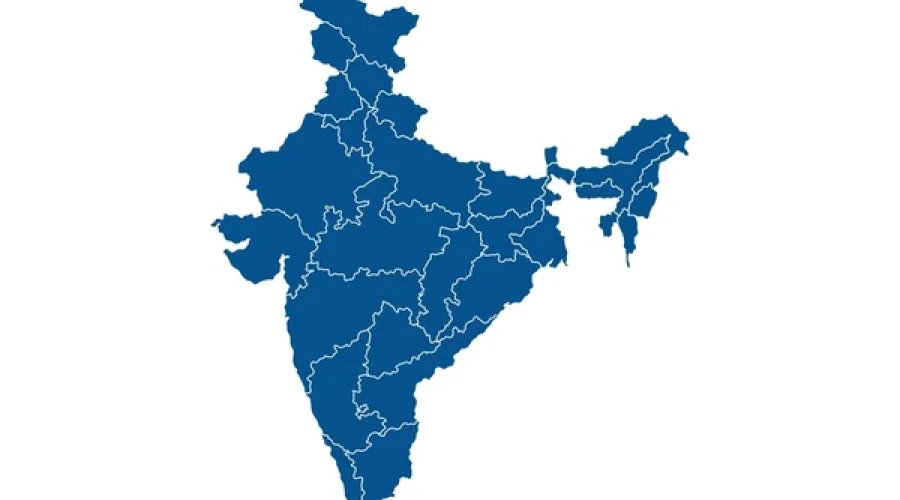
India is one of the world’s largest and most dynamic economies, spanning approximately 2.97 million km² and home to over 1.3 billion people. With the largest agricultural sector globally and rapidly growing energy demand, India sits at a critical intersection of food security, energy transition, and climate mitigation.
As the world’s third-largest energy consumer, India remains heavily dependent on imported fossil fuels, creating vulnerabilities in energy security. While renewables account for around 22% of total energy supply, the majority of this comes from traditional bioenergy—primarily used for residential heating—which is gradually being replaced by cleaner fuels such as oil and gas.
At the same time, India faces severe environmental challenges. Agricultural residue burning, high population density, and fossil fuel use contribute significantly to air pollution, which has been linked to nearly 18% of annual deaths. These challenges position biochar as a highly relevant solution, offering both climate mitigation and agricultural productivity benefits.
Ecosystem and Associations
The Carbon Removal India Alliance (CRIA) plays a central role in advancing carbon removal solutions in the country. As a leading platform for collaboration, CRIA connects stakeholders across research, industry, and policy to accelerate the development of carbon dioxide removal (CDR) pathways.
Biochar is increasingly recognized within this ecosystem as a scalable and practical solution, particularly due to its alignment with India’s agricultural and waste management challenges.
Production Landscape
Crop Residue Management as a Key Driver
India generates an estimated 100 million tonnes of agricultural residues annually, with a significant portion originating from rice cultivation. Despite regulatory bans, open-field burning remains widespread—especially between October and December—leading to severe air pollution and soil degradation.
Biochar production via pyrolysis is emerging as a viable alternative, transforming agricultural waste into a valuable resource while reducing emissions and improving soil health.
Technology Providers
Domestic companies such as APChemi and Ankur Scientific are developing pyrolysis and gasification systems capable of processing a wide range of feedstocks, including agricultural residues, forestry waste, sewage sludge, and even non-organic materials.
Artisanal Production Models
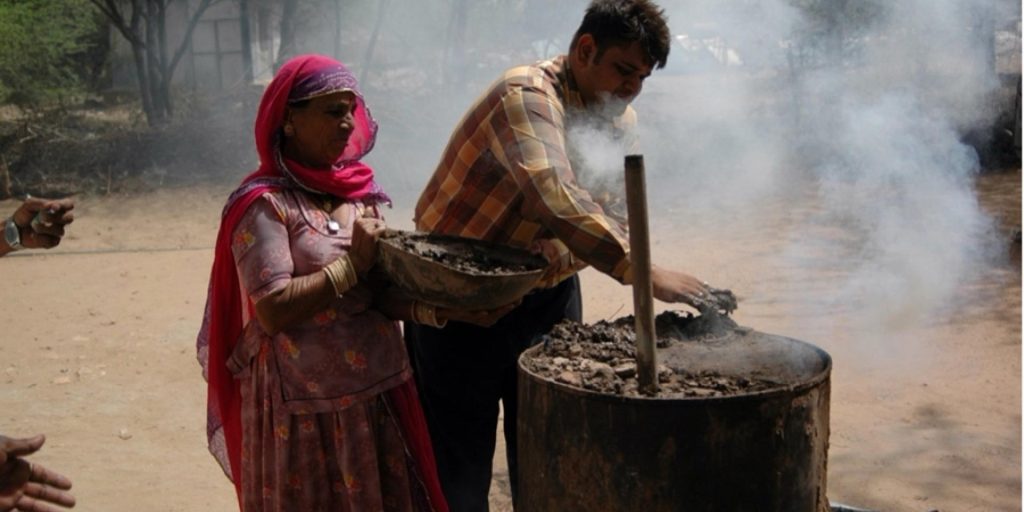
A growing number of smallholder farmers are producing biochar using low-cost kiln technologies. These decentralized systems enable farmers to:
- Manage crop residues without burning
- Improve soil fertility
- Access voluntary carbon markets through biochar carbon removal (BCR) credits
However, scalability remains a challenge. Biochar production is time-intensive, and farmers often face labor and capacity constraints.
Projects led by companies such as Varaha are addressing these barriers. For example, Varaha utilizes invasive Prosopis juliflora biomass in Gujarat and Rajasthan, producing biochar through Kon-Tiki kilns and already removing thousands of tonnes of CO₂ while supporting local agriculture.
Other ecosystem players include Carboneers and Circonomy, which are facilitating project development and scaling efforts.
Industrial Production Models
At the industrial level, a common model involves pyrolysis plant operators sourcing biomass from farmers at no cost, converting it into biochar, and returning the product to farmers for soil application. Revenue is primarily generated through carbon credits rather than direct product sales.
Some models also include biomass aggregation systems, where feedstock is purchased and processed at scale.
Innovative Technologies
Takachar
An award-winning startup (including recognition from the Earthshot Prize), Takachar has developed portable biochar reactors designed for smallholder farmers. Their technology reduces emissions from crop residue burning by up to 98% and has demonstrated:
- 20–30% increases in crop yields
- Up to 30% higher farmer income
Takachar’s solutions are now deployed not only in India but also in countries such as Kenya and the United States.
Mash Makes
Mash Makes operates industrial-scale biochar production facilities, including a site in Udupi that processes cashew waste. With over 7,000 tonnes of biochar produced, the company targets both agricultural applications and industrial uses such as biofuel substitution in hard-to-abate sectors.
Applications
Biochar applications in India are predominantly focused on agriculture. Farmers benefit from improved soil structure, enhanced water retention, and increased nutrient efficiency.
Despite strong agronomic results, widespread adoption still requires greater awareness and education. Bridging this knowledge gap is critical to scaling biochar use across India’s vast agricultural landscape.
Research and Development
India has a strong and growing research base in biochar technologies and applications.
- Indian Institute of Technology (IIT) campuses, particularly in Roorkee and Guwahati, are actively researching biomass conversion, wastewater treatment, and environmental applications of biochar.
- Indian Institute of Science (IISc) has explored biochar applications in cement and construction materials, contributing to the development of carbon-negative building solutions.
These institutions are advancing both the scientific understanding and practical deployment of biochar technologies.
Policy, Frameworks, and National Strategies
While India does not yet have dedicated biochar policies, several national programs indirectly support its development:
- National Mission on Sustainable Agriculture
- Crop Residue Management Scheme
Importantly, biochar has been recognized by the Bureau of Energy Efficiency as an eligible methodology under India’s Carbon Credit Trading Scheme (CCTS). This inclusion marks a significant milestone, enabling biochar projects to generate compliance-grade carbon credits.
The CCTS is expected to launch its biochar carbon removal market component around 2026, positioning India as a potentially major player in global carbon markets.
Key Insights
India represents one of the most promising biochar markets globally due to:
- Massive availability of agricultural residues
- Urgent need to address air pollution from residue burning
- Strong alignment with national sustainability and climate goals
- Rapid growth potential in carbon markets
If supported by clear policy frameworks, scalable technologies, and farmer engagement, biochar could become a cornerstone of India’s circular bioeconomy and climate strategy.