Biochar: The Ancient Secret Behind Japan’s Productive Soils and a Modern Solution for Climate Change
In today’s world, where agriculture faces growing challenges from soil degradation, climate change, water scarcity, and rising fertilizer costs, many farmers and researchers are searching for sustainable solutions that can improve productivity while protecting the environment.
Surprisingly, one of the most promising solutions is not a new invention. It is a centuries-old practice that Japanese farmers have been using for generations: Biochar.
Today, biochar is gaining global recognition not only as a powerful soil amendment but also as one of the most effective carbon removal technologies available, creating opportunities in regenerative agriculture, carbon markets, and Net Zero strategies.
What is Biochar?
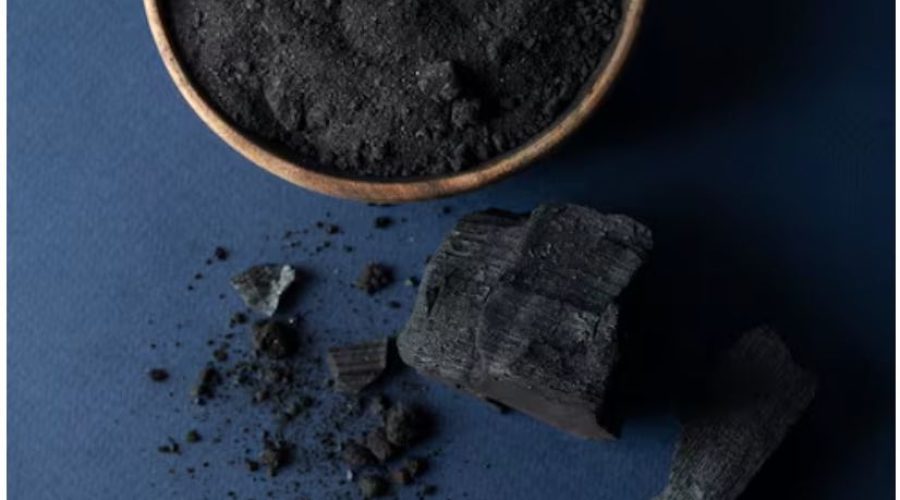
Biochar is a stable, carbon-rich material produced by heating biomass under limited oxygen conditions through a process known as pyrolysis.
Various organic materials can be used as feedstock, including rice husks, coconut shells, wood waste, bamboo, corn stalks, sugarcane residues, coffee husks, and other agricultural by-products.
Unlike open burning, which releases most carbon directly into the atmosphere as carbon dioxide, pyrolysis converts a significant portion of that carbon into a stable solid form. This carbon can remain stored in soils for hundreds or even thousands of years.
The result is a lightweight, highly porous material with extraordinary physical and chemical properties that benefit both soil ecosystems and climate mitigation efforts.
The Japanese Experience: Hundreds of Years of Practical Knowledge
Long before the terms “carbon sequestration” or “regenerative agriculture” existed, Japanese farmers had already discovered the agricultural value of biochar.
Historical records show that farmers in Japan used carbonized rice husks, commonly known as Kuntan, as a soil amendment as early as the Edo period (1603–1868). Rice husks were converted into char and incorporated into agricultural soils to improve fertility and crop performance.
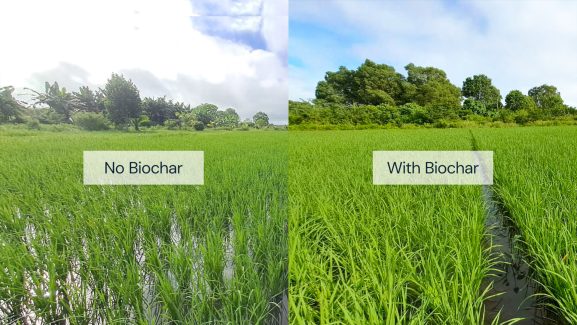
Over generations, farmers observed that fields treated with biochar retained moisture more effectively, supported healthier plant growth, and maintained productivity even under intensive cultivation.
This practice reflected a broader Japanese philosophy of resource efficiency and circularity. Agricultural residues were not considered waste. Instead, they were transformed into valuable resources and returned to the land.
What modern science is proving today is what Japanese farmers had already learned through centuries of experience.
Why Does Biochar Work So Well?
The secret lies in biochar’s unique structure.
Under a microscope, biochar resembles a complex network of tiny pores and channels. These microscopic cavities create an enormous internal surface area that can interact with water, nutrients, and microorganisms.
This structure allows biochar to perform multiple functions simultaneously.
Improved Water Retention
One of the most valuable benefits of biochar is its ability to retain water.
In sandy soils, water often drains too quickly, leaving crops vulnerable to drought stress. Biochar acts like a sponge, capturing water and releasing it gradually to plant roots.
As climate change increases the frequency of droughts and extreme weather events, this capability becomes increasingly important for agricultural resilience.
Enhanced Nutrient Efficiency
Modern agriculture often suffers from nutrient losses through leaching and runoff.
Biochar helps address this challenge by holding essential nutrients such as nitrogen, phosphorus, potassium, calcium, and magnesium within its porous structure. Instead of being washed away, nutrients remain available to crops for longer periods.
This can reduce fertilizer requirements, lower production costs, and decrease environmental pollution.
Better Soil Structure
Compacted soils restrict root growth and reduce oxygen availability.
Biochar improves soil aeration, increases porosity, and enhances root development. In heavy clay soils, it improves drainage, while in sandy soils it improves moisture retention.
The result is a healthier soil environment capable of supporting stronger plant growth.
A Habitat for Beneficial Microorganisms
Healthy soils are living ecosystems.
The porous structure of biochar provides shelter for beneficial bacteria, fungi, and other microorganisms that play critical roles in nutrient cycling, disease suppression, and soil fertility.
By supporting microbial communities, biochar contributes to long-term soil health and ecosystem resilience.
Biochar and Carbon Removal: Beyond Agriculture
While farmers have appreciated biochar for centuries because of its agricultural benefits, the world is now paying attention for another reason: its ability to remove carbon from the atmosphere.
Plants naturally absorb carbon dioxide through photosynthesis. When biomass is converted into biochar instead of being burned or left to decompose, a significant portion of that carbon becomes locked in a highly stable form.
This process effectively removes carbon from the short-term carbon cycle and stores it for centuries.
Because of this capability, biochar is now recognized internationally as a leading Carbon Dioxide Removal (CDR) technology.
Organizations, corporations, and governments seeking to achieve Net Zero targets are increasingly investing in biochar projects because they generate measurable and verifiable carbon removal outcomes.
Creating Economic Value Through Carbon Credits
One of the most exciting developments in the biochar industry is the emergence of carbon credit markets.
Certified biochar projects can quantify the amount of carbon permanently removed from the atmosphere and convert these removals into tradable carbon credits.
This creates a new revenue stream for farmers, cooperatives, agricultural processors, and biomass project developers.
Instead of treating agricultural residues as waste, businesses can transform them into:
- High-quality biochar products
- Improved agricultural productivity
- Renewable energy co-products
- Carbon removal credits
- Long-term sustainability assets
This combination of environmental and economic value is attracting growing interest from investors worldwide.
A Massive Opportunity for Vietnam
Vietnam possesses abundant biomass resources that are often underutilized or openly burned.
Rice husks, coconut shells, coffee residues, sugarcane bagasse, corn stalks, cassava waste, forestry residues, and many other biomass streams represent a tremendous opportunity for biochar production.
Particularly in sectors such as coconut processing, rice production, coffee cultivation, and forestry, biochar can help address multiple challenges simultaneously:
- Improving soil fertility
- Increasing agricultural productivity
- Reducing fertilizer dependency
- Managing agricultural waste sustainably
- Generating carbon credits
- Supporting ESG and Net Zero commitments
For a country with strong agricultural foundations and growing sustainability ambitions, biochar represents more than a soil amendment. It is a strategic platform connecting regenerative agriculture, circular economy principles, climate action, and rural economic development.
Looking Ahead
The growing global interest in biochar demonstrates an important lesson: sometimes the most innovative solutions are rooted in traditional knowledge.
What Japanese farmers discovered centuries ago is now being validated by modern science and embraced by global climate strategies.
Biochar offers a rare combination of benefits—it improves soils, supports farmers, reduces waste, generates carbon credits, and removes carbon dioxide from the atmosphere.
As the world accelerates its transition toward a low-carbon future, biochar is positioned to become one of the most important tools for sustainable agriculture and climate action in the decades ahead.
The question is no longer whether biochar works. The question is how quickly we can scale its adoption to unlock its full environmental, economic, and social potential.