
The Complete Guide to Plant Nutrition: From Fundamentals to Advanced Crop Nutrition Management
Why Plant Nutrition Matters More Than Ever
Every farmer wants healthier crops, higher yields, better quality produce, and lower production costs. Yet many agricultural challenges—including poor growth, disease susceptibility, low productivity, and declining soil fertility—can often be traced back to one fundamental issue: improper plant nutrition.
Plant nutrition is far more than simply applying fertilizer. It is the science of providing crops with the right nutrients, in the right amounts, at the right time, and in the right balance.
Understanding how plants absorb, utilize, and respond to nutrients is one of the most valuable skills any grower can develop. Whether you are growing rice, vegetables, coffee, pepper, fruit trees, coconuts, or industrial crops, mastering plant nutrition can dramatically improve both profitability and sustainability.
Understanding How Plants Feed Themselves
Plants produce their own food through photosynthesis, converting sunlight, water, and carbon dioxide into energy-rich compounds.
However, photosynthesis alone is not enough.
Just as humans require vitamins and minerals, plants require a range of essential nutrients to build roots, stems, leaves, flowers, fruits, and seeds.
These nutrients come primarily from:
- Soil minerals
- Organic matter
- Water
- Biological activity
- Fertilizers and soil amendments
When any essential nutrient becomes deficient, plant growth slows or becomes abnormal. Conversely, excessive nutrient application can be equally harmful.
Successful nutrition management is therefore about balance rather than abundance.
The 17 Essential Elements for Plant Growth
Scientists have identified seventeen essential elements required for normal plant development.
Non-Mineral Elements
These elements are obtained primarily from air and water:
- Carbon (C)
- Hydrogen (H)
- Oxygen (O)
Together, they account for more than 90% of plant biomass.
Primary Macronutrients
Plants require these nutrients in the largest quantities:
Nitrogen (N)
Nitrogen is responsible for vegetative growth.
It supports:
- Leaf development
- Chlorophyll production
- Protein synthesis
- Overall plant vigor
Nitrogen deficiency often causes yellowing of older leaves and reduced growth, while excessive nitrogen can result in overly lush growth, delayed flowering, and increased pest pressure.
Phosphorus (P)
Phosphorus plays a critical role in:
- Root development
- Flower formation
- Fruit setting
- Energy transfer within the plant
Deficient plants often develop weak root systems and poor reproductive performance.
Potassium (K)
Potassium regulates numerous physiological processes, including:
- Water balance
- Stress tolerance
- Disease resistance
- Fruit quality
Potassium deficiency frequently appears as leaf edge scorching or poor fruit development.
Secondary Macronutrients
Although required in smaller amounts than NPK, these nutrients remain essential.
Calcium (Ca)
Calcium strengthens cell walls and supports healthy root growth.
Deficiency often causes:
- Blossom-end rot in tomatoes
- Tip burn in leafy vegetables
- Root development problems
Magnesium (Mg)
Magnesium is the central component of chlorophyll.
Without adequate magnesium, photosynthesis efficiency declines significantly.
Sulfur (S)
Sulfur contributes to:
- Protein formation
- Enzyme activity
- Crop flavor and aroma
Sulfur deficiencies often resemble nitrogen deficiency but usually appear first in younger leaves.
Micronutrients: Small Quantities, Huge Importance
Micronutrients are required in very small amounts but can significantly influence crop performance.
These include:
- Iron (Fe)
- Zinc (Zn)
- Manganese (Mn)
- Copper (Cu)
- Boron (B)
- Molybdenum (Mo)
- Chlorine (Cl)
- Nickel (Ni)
Even minor deficiencies can result in:
- Poor flowering
- Reduced fruit set
- Lower disease resistance
- Yield reduction
Many growers focus exclusively on NPK while overlooking micronutrients, often limiting crop performance despite substantial fertilizer investments.
Soil Health: The Foundation of Plant Nutrition
Healthy soil functions as more than a physical medium for roots.
It acts as a living ecosystem that stores, cycles, and delivers nutrients to plants.
A healthy soil contains:
- Organic matter
- Beneficial microorganisms
- Stable soil structure
- Adequate moisture
- Balanced pH
Without healthy soil, even the best fertilizer program may fail to achieve optimal results.
The Importance of Soil Organic Matter
Organic matter acts as the engine of nutrient cycling.
Benefits include:
- Increased nutrient retention
- Improved water-holding capacity
- Enhanced microbial activity
- Better soil structure
- Reduced nutrient losses
Unfortunately, intensive farming practices often reduce soil organic matter over time.
Rebuilding organic matter should therefore be a long-term priority for every farm.
Biochar: A New Tool for Advanced Nutrient Management
One of the most promising developments in modern agriculture is the use of biochar.
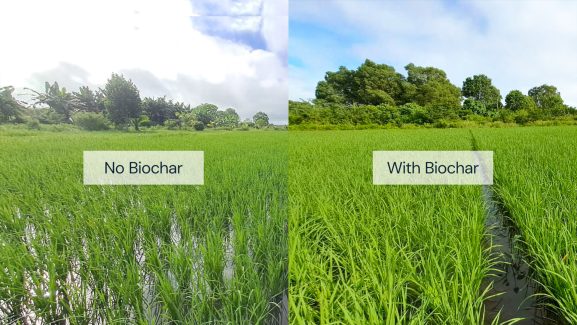
Biochar is a stable carbon-rich material produced through biomass pyrolysis. Its highly porous structure enables it to retain water, nutrients, and beneficial microorganisms. Studies and field applications have shown that biochar can improve nutrient use efficiency, reduce fertilizer losses, and support long-term soil fertility.
When combined with compost, manure, or biological fertilizers, biochar can act as a nutrient reservoir, slowly releasing nutrients to crops while improving soil health.
This makes biochar particularly valuable in regenerative agriculture systems.
Recognizing Nutrient Deficiencies
Experienced farmers often diagnose problems simply by observing plant symptoms.
Common indicators include:
Yellow Leaves
Possible causes:
- Nitrogen deficiency
- Sulfur deficiency
- Iron deficiency
Purple Leaves
Often associated with:
- Phosphorus deficiency
- Cold soil conditions
Burnt Leaf Edges
Commonly linked to:
- Potassium deficiency
- Salt stress
Deformed New Growth
May indicate:
- Calcium deficiency
- Boron deficiency
Early diagnosis can prevent significant yield losses and reduce unnecessary fertilizer applications.
The 4R Principle of Nutrient Stewardship
Modern crop nutrition increasingly follows the internationally recognized 4R framework:
Right Source
Select the most suitable nutrient source for the crop and soil condition.
Right Rate
Apply only the amount required to meet crop demand.
Right Time
Provide nutrients when plants can use them most efficiently.
Right Place
Position nutrients where roots can access them effectively.
The 4R approach improves productivity while reducing environmental impacts.
Moving Beyond Fertilizers Toward Nutrition Management
The future of agriculture will not be defined by who applies the most fertilizer.
Instead, success will belong to farmers who understand nutrient cycling, soil biology, carbon management, water efficiency, and ecosystem health.
Plant nutrition should no longer be viewed as a simple fertilizer application program. It is an integrated management system involving soil health, organic matter, microbial activity, crop physiology, and sustainable resource use.
As agriculture moves toward regenerative and climate-smart production systems, nutrition management will become one of the most important drivers of profitability, resilience, and long-term sustainability.
Final Thoughts
Healthy crops begin with healthy soils, and healthy soils begin with balanced nutrition.
By understanding how nutrients interact with plants, soil, microorganisms, and environmental conditions, farmers can move beyond reactive fertilization practices toward a more scientific and sustainable approach.
Whether you are managing a small vegetable garden or thousands of hectares of commercial farmland, mastering plant nutrition is one of the most valuable investments you can make for the future of your farm.
The goal is not simply to feed the crop. The goal is to nourish the entire agricultural ecosystem.