The One Million Hectare Low-Emission Rice Program: Can Biochar Really Work for Vietnamese Farmers?
Vietnam has embarked on one of the world’s most ambitious agricultural transformation initiatives: the One Million Hectare High-Quality, Low-Emission Rice Program in the Mekong Delta.
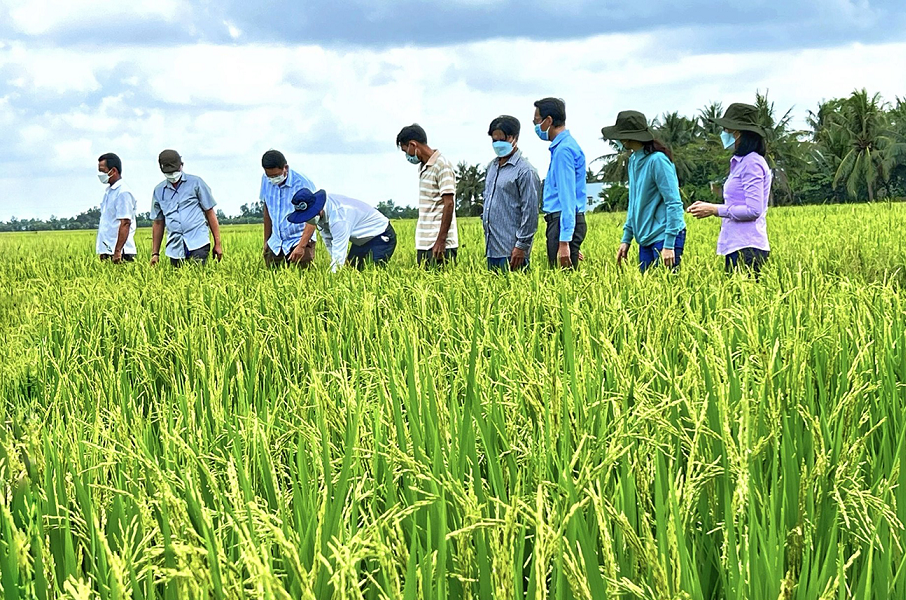
The goal is clear. By 2030, Vietnam aims to reduce greenhouse gas emissions from rice production while improving farmer incomes, enhancing export competitiveness, and supporting the country’s Net Zero commitment. Rice cultivation currently accounts for a significant share of agricultural greenhouse gas emissions, particularly methane emissions from flooded paddy fields.
Among the many solutions being discussed, one technology is attracting growing attention from researchers, policymakers, carbon market developers, and agricultural enterprises:
Biochar.
But beyond the scientific enthusiasm lies a more important question:
Is biochar truly practical for millions of Vietnamese rice farmers?
The answer is neither a simple yes nor a simple no.
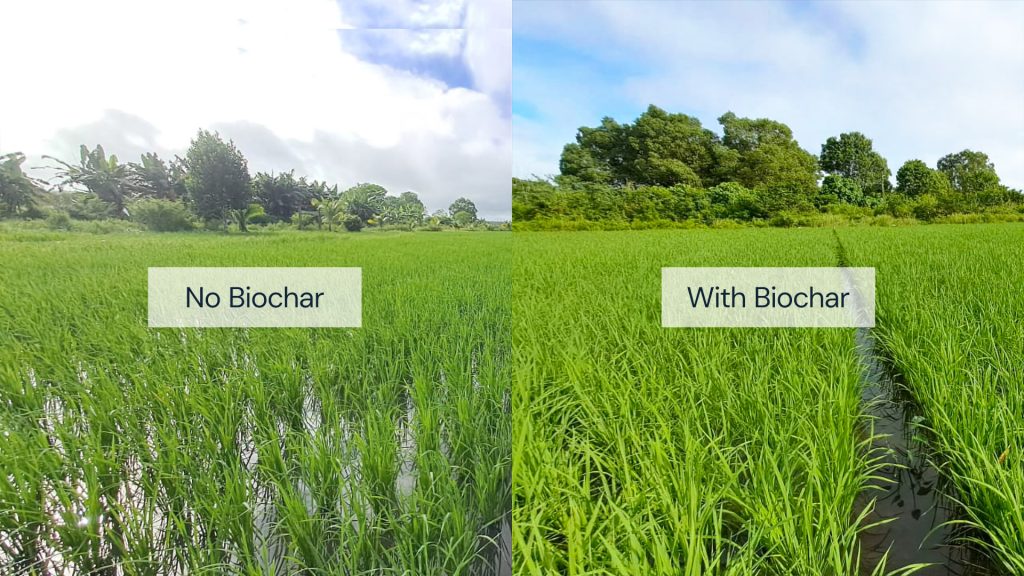
Why Biochar Has Become Part of the Conversation
Vietnam produces tens of millions of tons of rice straw every year. Much of this biomass is still burned in the field, left to decompose, or underutilized.
At the same time, rice cultivation faces several challenges:
- Methane emissions from flooded soils
- Declining soil health
- Rising fertilizer costs
- Increasing climate risks
- Growing demands from international buyers for low-carbon products
Biochar offers a unique opportunity because it addresses several of these challenges simultaneously.
Produced through the pyrolysis of rice straw, rice husks, or other agricultural residues under oxygen-limited conditions, biochar converts agricultural waste into a stable carbon-rich material that can be returned to the soil. Instead of releasing carbon into the atmosphere through open burning, a significant portion of that carbon is permanently stored in a stable form.
This makes biochar both a soil improvement tool and a carbon removal technology.
How Biochar Can Support Low-Emission Rice Production
Scientific studies and pilot projects have identified several mechanisms through which biochar may contribute to lower-emission rice farming.
Reducing Methane Emissions
Methane is the largest greenhouse gas source in rice cultivation.
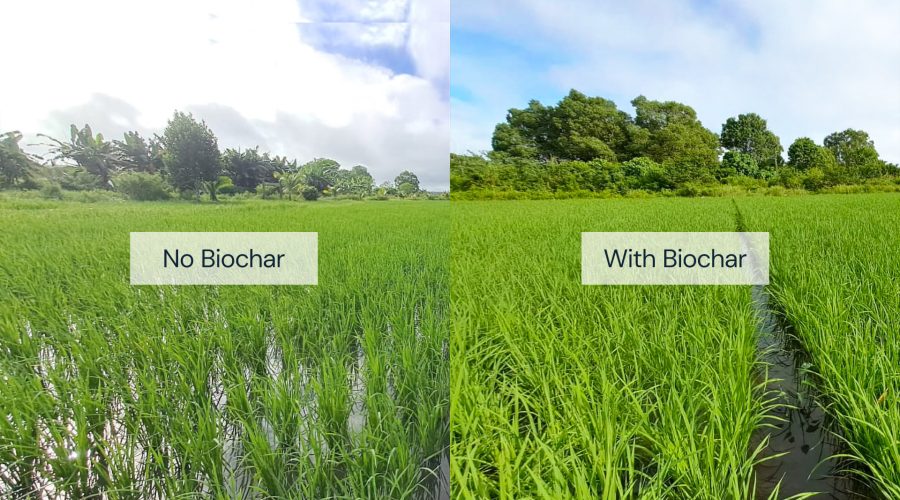
When biochar is incorporated into paddy soils, it can improve soil aeration and alter microbial activity, reducing methane generation under certain conditions.
Pilot projects in Vietnam have reported methane reductions ranging from approximately 15% to 30%, depending on soil conditions and management practices.
Improving Fertilizer Efficiency
Fertilizer costs continue to be a major concern for Vietnamese farmers.
Biochar’s porous structure acts like a nutrient reservoir, helping retain nitrogen and other nutrients in the root zone.
This can reduce nutrient losses while improving fertilizer-use efficiency.
In a period of rising fertilizer prices, even modest reductions in fertilizer requirements can have significant economic benefits for farmers.
Improving Soil Health
Decades of intensive rice cultivation have contributed to soil degradation in many areas.
Biochar can improve:
- Soil structure
- Water retention
- Microbial activity
- Nutrient availability
- Root development
Unlike fertilizers, whose effects may last only weeks or months, biochar can remain active in soil for years or even decades.
Generating Carbon Credits
Perhaps the most transformative opportunity lies in carbon markets.
Because biochar permanently stores carbon, it can potentially generate carbon removal credits under international carbon standards.
This creates a new revenue stream that traditional soil amendments cannot provide.
For the first time, farmers may be compensated not only for producing rice but also for removing carbon from the atmosphere.
The Economic Reality: The Biggest Challenge
While the environmental benefits are attractive, economics ultimately determine adoption.
This is where the conversation becomes more complicated.
Current estimates suggest that meaningful biochar application rates may require several tons per hectare during the initial implementation phase. Depending on production methods and logistics, costs can be substantial relative to average rice farm income. Pilot assessments have indicated that payback periods may extend over several years, creating a significant barrier for smallholder farmers.
From a farmer’s perspective, the question is straightforward:
“If I invest today, when will I see a return?”
For many smallholders operating on thin profit margins, even a promising long-term investment may be difficult to justify without external support.
The Supply Challenge
Another major obstacle is scale.
If Vietnam were to apply biochar across one million hectares of rice land, the required production volume would be enormous.
This would require:
- Large-scale straw collection systems
- Thousands of pyrolysis units or regional processing hubs
- Quality control standards
- Distribution networks
- Technical support services
Current biochar production capacity in Vietnam remains relatively limited compared to the potential demand envisioned under the one-million-hectare initiative.
In other words, the challenge is not whether biochar works.
The challenge is whether it can be produced, transported, financed, and deployed at sufficient scale.
Why Biochar Should Not Be Viewed as a Standalone Solution
One of the most important lessons from successful low-emission agriculture programs worldwide is that no single technology solves everything.
Biochar performs best when integrated into a broader package of sustainable farming practices.
For rice cultivation, this includes:
Alternate Wetting and Drying (AWD)
AWD irrigation techniques reduce methane emissions by periodically allowing fields to dry rather than maintaining continuous flooding.
Studies consistently show that AWD can be one of the most effective methane reduction strategies available to rice farmers. Combining AWD with biochar may further enhance overall emission reductions.
Improved Nutrient Management
Better timing and targeting of fertilizer applications can reduce both costs and emissions.
Biochar can enhance these benefits by improving nutrient retention.
Straw Management
Rather than burning rice straw, farmers can convert it into a valuable resource.
This aligns perfectly with circular economy principles and creates opportunities for local biochar production systems.
A More Realistic Path Forward
The vision of applying biochar across one million hectares sounds impressive, but successful implementation will likely require a phased approach.
Phase 1: Demonstration and Validation
Focus on:
- Pilot regions
- Farmer field schools
- Demonstration farms
- Economic validation
Farmers need to see results with their own eyes before widespread adoption occurs.
Phase 2: Cooperative-Based Production
Agricultural cooperatives may become the most practical model for scaling biochar.
Instead of individual farmers investing in equipment, cooperatives can:
- Collect rice straw
- Produce biochar collectively
- Share equipment costs
- Provide technical support
This significantly lowers financial barriers.
Phase 3: Carbon Finance Integration
Long-term success will depend heavily on carbon markets.
If carbon credits can help offset biochar costs, the economics change dramatically.
Instead of viewing biochar solely as an agricultural input, farmers can view it as an income-generating climate asset.
The Bigger Picture
The discussion around biochar is ultimately about more than carbon reduction.
It is about transforming agricultural waste into value.
It is about improving soil health rather than simply increasing fertilizer inputs.
It is about helping farmers become active participants in the green economy rather than passive recipients of environmental regulations.
Most importantly, it is about creating a pathway where environmental benefits and farmer profitability can coexist.
Conclusion
So, is biochar truly feasible for Vietnam’s One Million Hectare Low-Emission Rice Program?
Technically, yes.
The science is increasingly clear. Biochar can reduce emissions, improve soil health, enhance nutrient efficiency, and potentially generate carbon credits. Pilot projects in Vietnam have already demonstrated promising results.
Economically and operationally, the answer depends on how it is implemented.
Without support mechanisms, large-scale production systems, carbon finance, and farmer training, adoption will likely remain limited.
However, with the right combination of policy support, cooperative models, private-sector investment, and carbon market participation, biochar could become one of the most important tools helping Vietnam achieve its vision of climate-smart, high-quality, and globally competitive rice production.
The future of low-emission rice farming will not be built on a single solution.
But biochar may well become one of its most valuable building blocks.