Does Biochar Really Increase Crop Yields? What the Latest Scientific Research Reveals
As biochar gains global attention as a tool for regenerative agriculture, carbon sequestration, and climate change mitigation, one question continues to be asked by farmers, agronomists, investors, and policymakers alike:
Does biochar actually increase crop yields?
The answer is both simple and nuanced.
Scientific evidence accumulated over the past two decades suggests that biochar can significantly improve crop productivity under the right conditions. However, biochar is not a miracle product, and its effectiveness depends on numerous factors including soil type, climate, feedstock source, application method, and overall farm management practices.
Understanding where, when, and how biochar works is essential for maximizing its benefits and avoiding unrealistic expectations.
The Growing Interest in Biochar
Biochar has evolved from a niche agricultural amendment into a globally recognized climate solution.
Produced through the pyrolysis of biomass under oxygen-limited conditions, biochar is a stable carbon-rich material capable of improving soil health while simultaneously removing carbon dioxide from the atmosphere.
What makes biochar particularly attractive is its ability to address multiple challenges at once:
- Soil degradation
- Water scarcity
- Nutrient loss
- Agricultural waste management
- Climate change mitigation
- Carbon credit generation
Yet for most farmers, the most important question remains straightforward:
Will it improve crop yields and farm profitability?
What Does the Scientific Evidence Say?
Over the past decade, hundreds of peer-reviewed studies have evaluated the impact of biochar on agricultural productivity.
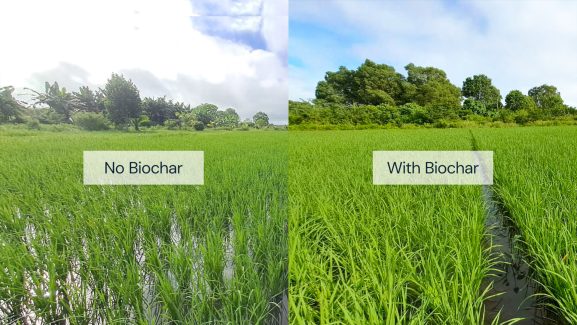
While results vary between regions and crop types, a growing body of evidence indicates that biochar generally has a positive effect on crop performance, particularly in degraded or nutrient-poor soils.
Several global meta-analyses—studies that combine results from dozens or even hundreds of independent experiments—have reported average crop yield increases ranging from approximately 10% to 25%, with some situations showing substantially higher improvements.
The greatest benefits are often observed in:
- Tropical and subtropical regions
- Acidic soils
- Sandy soils
- Highly weathered soils
- Areas with low organic matter content
In contrast, highly fertile soils may show smaller yield responses because fewer limitations exist for biochar to address.
The key message from the scientific literature is clear:
Biochar tends to work best where soil health challenges already exist.
Why Can Biochar Increase Yields?
Biochar does not function like a traditional fertilizer.
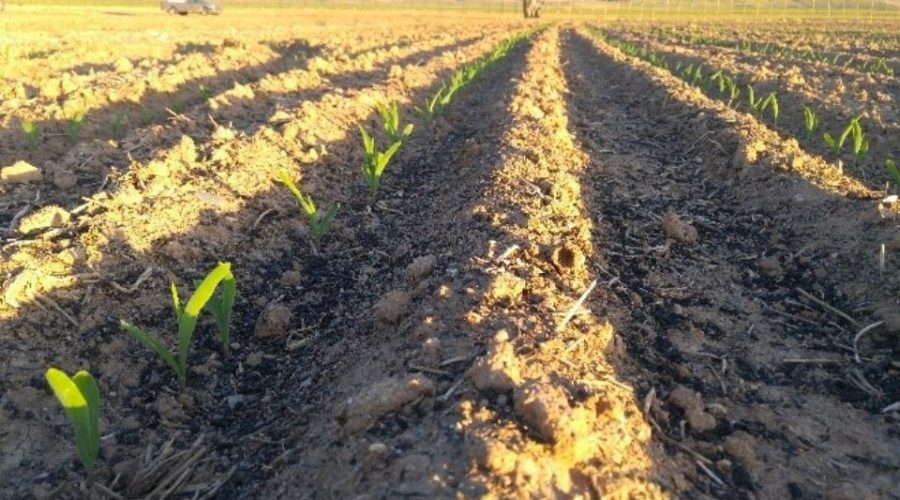
Instead of directly feeding plants, it improves the physical, chemical, and biological properties of soil, creating conditions that support healthier plant growth.
Improved Water Retention
One of biochar’s most valuable characteristics is its highly porous structure.
Microscopic pores throughout the material can absorb and store significant amounts of water, making it available to crops during dry periods.
For farmers operating in drought-prone regions or under increasingly variable rainfall patterns, improved soil moisture retention can have a direct impact on crop performance.
Research has shown that soils amended with biochar often maintain higher moisture levels between irrigation events, reducing plant stress and supporting more consistent growth.
Better Nutrient Retention
Nutrient loss is one of agriculture’s most expensive challenges.
Nitrogen, phosphorus, potassium, and micronutrients can easily be lost through leaching, runoff, or volatilization.
Biochar acts as a nutrient reservoir.
Its extensive surface area and charged surfaces help retain nutrients within the root zone, reducing losses and increasing nutrient-use efficiency.
In practical terms, this means crops can access nutrients more effectively while farmers may reduce fertilizer requirements over time.
Enhanced Root Development
Healthy roots are the foundation of healthy crops.
By improving soil structure and aeration, biochar creates an environment where roots can penetrate more easily and access water and nutrients more efficiently.
In compacted soils, root growth is often restricted by poor oxygen availability and physical resistance.
Biochar helps alleviate these limitations, allowing crops to develop stronger and deeper root systems.
Increased Microbial Activity
Soils are living ecosystems containing billions of microorganisms.
These microbes play essential roles in nutrient cycling, disease suppression, and soil fertility.
The porous architecture of biochar provides ideal habitats for beneficial bacteria and fungi.
Many researchers describe biochar as a “microbial apartment complex” because of its ability to shelter and support diverse microbial communities.
A healthier microbial ecosystem often translates into healthier crops.
Why Do Some Studies Show Limited Results?
Despite the generally positive findings, not every study reports significant yield increases.
This does not necessarily mean biochar failed.
Instead, it highlights an important reality: biochar is not a universal solution.
Several factors influence performance.
Soil Fertility Status
Highly fertile soils may already provide optimal conditions for plant growth.
In such cases, additional improvements from biochar may be relatively modest.
Biochar Quality
Not all biochars are the same.
Feedstock selection, production temperature, residence time, and processing methods can dramatically influence biochar properties.
Biochar produced from rice husks behaves differently from biochar produced from coconut shells, bamboo, wood residues, or agricultural waste.
Application Rates
Too little biochar may not produce measurable effects.
Excessive application rates may also create challenges, particularly if the biochar has not been properly conditioned or integrated with organic matter.
Time Horizon
One of the most important misconceptions is expecting immediate results.
Unlike chemical fertilizers, which often produce rapid responses, biochar frequently delivers its greatest benefits over multiple growing seasons as it gradually improves soil quality.
Many long-term field trials have shown that biochar performance often improves over time.
Biochar and Fertilizer: A Powerful Combination
One of the most promising findings from recent research is that biochar performs exceptionally well when combined with organic or inorganic fertilizers.
Rather than replacing fertilizers entirely, biochar enhances fertilizer efficiency.
For example:
- Compost provides nutrients.
- Biochar stores and retains those nutrients.
- Microorganisms help make nutrients available to plants.
Together, these components create a more resilient and productive soil system.
Many researchers now recommend integrated soil management approaches that combine biochar with compost, manure, cover crops, and balanced nutrient programs.
Beyond Yield: Additional Benefits for Farmers
Focusing solely on crop yields may underestimate the true value of biochar.
Many farmers report additional benefits including:
- Reduced irrigation requirements
- Lower fertilizer losses
- Improved soil structure
- Increased resilience during drought
- Enhanced soil organic carbon
- Better nutrient-use efficiency
- Reduced soil acidity in certain conditions
These advantages can improve farm profitability even when yield increases are moderate.
Biochar as a Climate Solution
The significance of biochar extends far beyond agriculture.
Unlike most soil amendments, biochar permanently removes carbon from the atmosphere.
Plants absorb carbon dioxide during growth.
When biomass is converted into biochar rather than decomposing or being openly burned, a substantial portion of that carbon becomes locked into a stable form that can remain in soil for centuries.
This process transforms biochar into one of the world’s most promising Carbon Dioxide Removal (CDR) technologies.
As voluntary and compliance carbon markets continue to expand, biochar projects are increasingly generating additional revenue through carbon credits while simultaneously improving agricultural productivity.
This creates a rare opportunity where environmental and economic objectives align.
What Does This Mean for Vietnam?
Vietnam possesses enormous potential for biochar adoption.
The country generates millions of tons of agricultural residues every year, including:
- Rice husks
- Coconut shells
- Coffee husks
- Sugarcane bagasse
- Corn stalks
- Forestry residues
- Fruit processing waste
Much of this biomass is currently underutilized or openly burned, contributing to air pollution and greenhouse gas emissions.
By converting these residues into biochar, Vietnam can simultaneously:
- Improve soil health
- Increase agricultural resilience
- Reduce waste
- Generate carbon credits
- Support ESG initiatives
- Advance Net Zero commitments
For a country with a strong agricultural foundation and growing climate ambitions, biochar represents a strategic opportunity that extends well beyond traditional farming.
The Bottom Line
So, does biochar really increase crop yields?
The scientific evidence suggests that it often does—especially in degraded, acidic, sandy, or nutrient-poor soils.
However, the real value of biochar goes beyond yield increases alone.
Biochar improves soil health, enhances water and nutrient efficiency, supports beneficial microbial communities, strengthens climate resilience, and permanently removes carbon from the atmosphere.
Rather than asking whether biochar is a fertilizer replacement, a better question may be:
How can biochar become part of a broader regenerative agriculture strategy that improves productivity, profitability, and sustainability at the same time?
As research continues to expand and more large-scale projects are implemented worldwide, biochar is increasingly proving that it is not simply a promising idea—it is a practical tool for building the future of agriculture.