
Australia’s Biochar Landscape: Industry Development, Policy Frameworks, and Market Opportunities
1. Overview
Australia, with a land area of approximately 7.69 million km², is a vast country characterized by highly diverse landscapes, ranging from central deserts to tropical rainforests in the northeast and mountainous regions in the southeast. Around 18% of the mainland is classified as desert, while more than 40% consists of rangelands and pasture. Forests cover roughly 17% of the land, and only about 4% is considered arable. Despite its size, Australia has a relatively low population density of around three people per square kilometer, with most of its approximately 25 million inhabitants concentrated along the eastern coastline.

The country is a major exporter of coal and natural gas, and these fossil fuels still dominate domestic electricity generation. As of 2024, about 64% of electricity production comes from coal and gas, although renewable energy sources—particularly solar (18%) and wind (12%)—are rapidly expanding. Bioenergy currently plays a relatively minor role despite significant domestic potential. According to the national Bioenergy Roadmap published in 2021, bioenergy could contribute up to 20% of Australia’s total energy mix by 2050.
The biochar industry in Australia is represented by the Australian & New Zealand Biochar Industry Group (ANZBIG), which supports collaboration among companies, government bodies, and research institutions. Although still in an early growth phase, biochar production is already present across multiple regions of the country.
2. Production
Australia hosts a diverse ecosystem of biochar technology providers, ranging from small-scale systems to industrial solutions. Companies such as Rainbow Bee Eater, BioCarbon, Energy Farmers Australia, Pyrochar, Pyrocal, and IQ Energy Australia are actively developing technologies with varying feedstocks, scales, and target outputs.
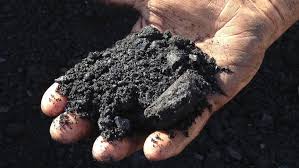
Current biochar production in Australia is estimated at approximately 20,000 to 25,000 tonnes annually, with several large-scale projects under development that are expected to significantly increase capacity in the near future. The industry itself is highly diverse. Traditional producers such as Byron Biochar, Green Man Char, and Jefferies focus on soil-related applications, supplying biochar-based products for agriculture.
A particularly notable development in Australia is the integration of biochar production into wastewater treatment systems. For example, the Loganholme wastewater treatment plant has implemented a biosolids gasification unit using continuous carbonisation technology. This system processes around 34,000 tonnes of biosolids annually, converting approximately 90% of waste into heat energy and biochar while significantly reducing contaminants such as PFAS, microplastics, and persistent organic pollutants. In addition, the facility has reduced greenhouse gas emissions by around 6,000 tonnes per year and eliminated costly long-distance transport of biosolids.
Another important initiative is IOTA’s PYROCO project, which focuses on fluidized bed pyrolysis technology for sewage sludge treatment. Following successful pilot phases, the technology is expected to reach commercial readiness by 2026.
Environmental pressures, particularly extreme climate conditions and invasive species, are also driving large-scale biochar projects. In Western Australia, a project targeting mesquite infestation across 225,000 hectares aims to convert 10.5 million tonnes of biomass into biochar over 20 years, generating approximately 500,000 carbon removal credits annually. Similarly, the Kangaroo Island project is designed to process fire-damaged wood from large-scale forest fires, handling up to 100,000 tonnes of biomass per year while reducing future fire risks.
Feedstocks used in bioenergy systems across Australia are highly varied and include forestry residues, sugarcane waste, livestock waste, fisheries by-products, and agricultural residues such as straw.
3. Applications
Biochar applications in Australia are primarily focused on agriculture, which aligns well with the country’s climatic conditions—particularly in dry and arid regions where soil improvement is critical. Biochar is used to enhance soil fertility, improve water retention, and increase resilience against drought. The inclusion of sewage sludge-derived biochar in agricultural applications is also gaining traction, supported by regulatory developments.
Beyond agriculture, industrial applications are emerging. For instance, the BioCarbon project in New South Wales is producing biochar for use in electric arc furnaces, replacing fossil-based coke in steel production. This demonstrates biochar’s potential not only as a soil amendment but also as a renewable carbon material for heavy industry.
4. Research and Development
Australia has a strong research foundation supporting the development of biochar technologies and applications. The Commonwealth Scientific and Industrial Research Organisation (CSIRO) has led numerous projects covering biochar production, agricultural applications, and the substitution of fossil carbon in industrial processes such as steelmaking. In 2023, commercialization of CSIRO’s pyrolysis technology for steel applications was advanced through licensing agreements.
Deakin University, particularly through its Water-Energy Nexus Research Group, has been actively researching the use of waste-derived biochar—such as sewage sludge—as a functional material for soil improvement and environmental remediation. Its Recycling and Clean Energy Commercialisation Hub collaborates with industry partners, including municipal water authorities, to explore applications ranging from agriculture to battery materials.
Other universities, including the University of Newcastle and the University of New South Wales, are also contributing to the growing body of research in biochar science and engineering.
5. Policy, Frameworks, and National Strategies
Australia’s primary carbon market mechanism is the Australian Carbon Credit Unit (ACCU) scheme, which supports both emissions reduction and carbon removal activities. In 2025, a significant milestone was achieved when biosolids-to-biochar pathways were formally recognized as a carbon removal method under the scheme. However, a dedicated methodology for biochar has not yet been fully established and is expected to be under development.
At the state level, policies addressing waste-to-resource transitions play an important role. For example, Queensland has implemented an End-of-Waste (EOW) code for biochar, enabling materials previously classified as waste—such as sewage sludge—to be reclassified as usable resources. While similar frameworks exist in other states, regulatory clarity remains inconsistent.
Nationally, the ANZBIG Biochar Industry 2030 Roadmap outlines a strategic vision for scaling the industry, including funding mechanisms, stakeholder engagement, and policy integration. In parallel, the Australian Renewable Energy Agency (ARENA) has published a Bioenergy Roadmap highlighting the broader role of biomass in the energy transition, although it does not explicitly focus on biochar.
Additionally, the National Soil Strategy (2021–2041) prioritizes soil health, innovation, and capacity building. While biochar is not explicitly mentioned, its applications align closely with the strategy’s objectives and funding priorities.
6. Gaps, Challenges, and Opportunities
Despite strong momentum, several challenges remain. One of the most significant barriers is the lack of a fully established biochar methodology within the ACCU framework, limiting the ability to scale carbon credit projects. Additionally, as production capacity increases, there is an urgent need to develop reliable off-take markets to absorb biochar output. Given Australia’s geographic location, transportation costs also pose challenges for international competitiveness.
However, the opportunities are substantial. The successful integration of sewage sludge biochar into wastewater systems presents a scalable model for sustainable waste management. Regulatory advancements enabling agricultural use of such biochar further enhance its economic viability. Biochar’s role in improving soil health in arid regions positions it as a critical tool for climate adaptation in agriculture.
Furthermore, with the development of large-scale projects, Australia has the potential to become a major exporter of biochar and renewable carbon materials, particularly for industrial applications such as steel production. By addressing current regulatory and market barriers, Australia could play a leading role in the global biochar and carbon removal economy.