Biochar Production Forecast to 2028: Massive Opportunities for the Global South
The global biochar industry is on the cusp of unprecedented expansion. According to the Nitidae Biochar Market Study released in June 2025, biochar production is experiencing explosive growth and is projected to reach remarkable milestones in the coming years.
Current Production and Future Projections
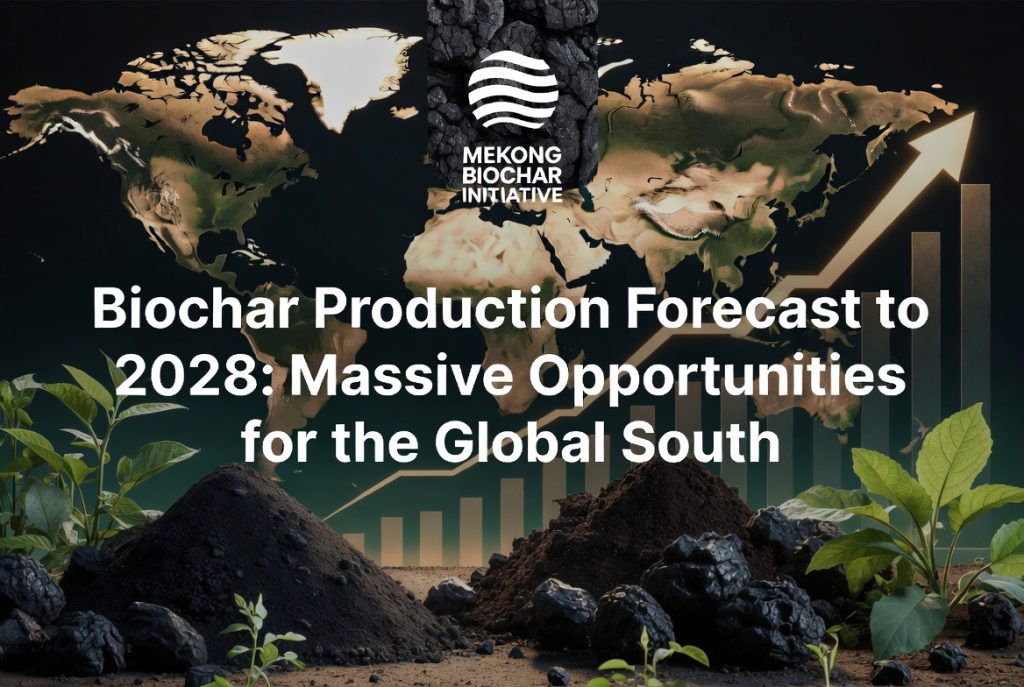
In 2023, global biochar production stood at approximately 350,000 tons, marking a significant leap from less than 100,000 tons in 2021. By the end of 2025, production is expected to exceed 2.5 million tons. Looking further ahead, leading carbon marketplace Supercritical forecasts that annual production could reach 4.4 million tons by 2028, equivalent to roughly 11 million carbon credits (using an average ratio of 1 ton of biochar = 2.5 tons of CO₂e removed).
This represents a compound annual growth rate (CAGR) of over 100% in the early years, making biochar one of the fastest-growing climate-tech sectors worldwide.
Shifting Global Production Landscape
Traditionally, North America and Europe have dominated biochar production. In 2023, these two regions accounted for 45% and 20% of global output respectively. However, a major geographic shift is underway. The Global South — encompassing Africa, Asia, and Latin America — is expected to drive the majority of future growth.
By 2028, the Global South is projected to represent up to 80% of total global biochar production. This dramatic transition is fueled by several structural advantages:
- Abundant and low-cost biomass resources
- Lower labor and operational costs
- High demand for soil regeneration and climate adaptation solutions
- Growing interest from international carbon credit buyers seeking high-quality removals
Why the Global South Holds Massive Potential
Countries in the Mekong Region, West Africa, and Latin America possess ideal conditions for large-scale biochar development. Agricultural residues such as rice husks, coffee parchment, cocoa pods, and cashew nut shells — often considered waste — serve as excellent feedstock for biochar production.
The Nitidae report emphasizes that industrial and artisan models can coexist effectively in these regions. While industrial projects offer high output and efficiency, artisan projects using Kon-Tiki kilns provide excellent opportunities for smallholder farmers to participate directly in the carbon economy.
Economic and Social Impact
The expansion of biochar production in the Global South offers transformative potential:
- Income Generation: Farmers can earn additional revenue by supplying biomass and applying biochar to their fields, with some artisan projects sharing up to 50% of carbon credit value.
- Soil Health: Biochar improves water retention, nutrient efficiency, and crop resilience — critical advantages in regions facing increasing climate variability.
- Circular Economy: Projects like NetZero and HUSK demonstrate successful closed-loop models where waste is converted into biochar and returned to the same agricultural communities.
Challenges to Overcome
Despite the optimistic forecast, several challenges must be addressed:
- Ensuring consistent quality and additionality for carbon credits
- Developing robust logistics and supply chains
- Building farmer awareness and demand for physical biochar
- Securing investment and technical support for project development
Strategic Role of Mekong Biochar Initiative
The Mekong region, with its rich agricultural economy and significant biomass availability, is perfectly positioned to become a major biochar hub in Asia. Mekong Biochar Initiative (MBI) is focused on bridging the gap between local production capacity and international market demand while ensuring equitable benefits for smallholder farmers.
Conclusion
The forecast to 2028 paints a compelling picture: biochar production will not only scale dramatically but will increasingly be concentrated in the Global South. This shift represents one of the most significant opportunities for developing countries to participate meaningfully in the global climate economy while addressing local agricultural and environmental challenges.
The coming years will be decisive. Stakeholders who act now — through investment, partnership, and project development — will be best positioned to capture value in this rapidly expanding market.
Contact Mekong Biochar Initiative
Website: https://mekongbiochar.com
Email: office@mekongbiochar.com
Hotline: +84 988 203 940
Linkedin: https://www.linkedin.com/company/mekong-biochar-initiative/