Building Bankable Biochar Carbon Removal Projects in Southeast Asia: Lessons from Vietnam
Vietnam has the potential to become a regional hub for Biochar development and carbon removal projects in Southeast Asia. However, realizing this potential requires the industry to move beyond technology demonstrations and pilot-scale experiments towards commercially viable production models capable of attracting private investment.
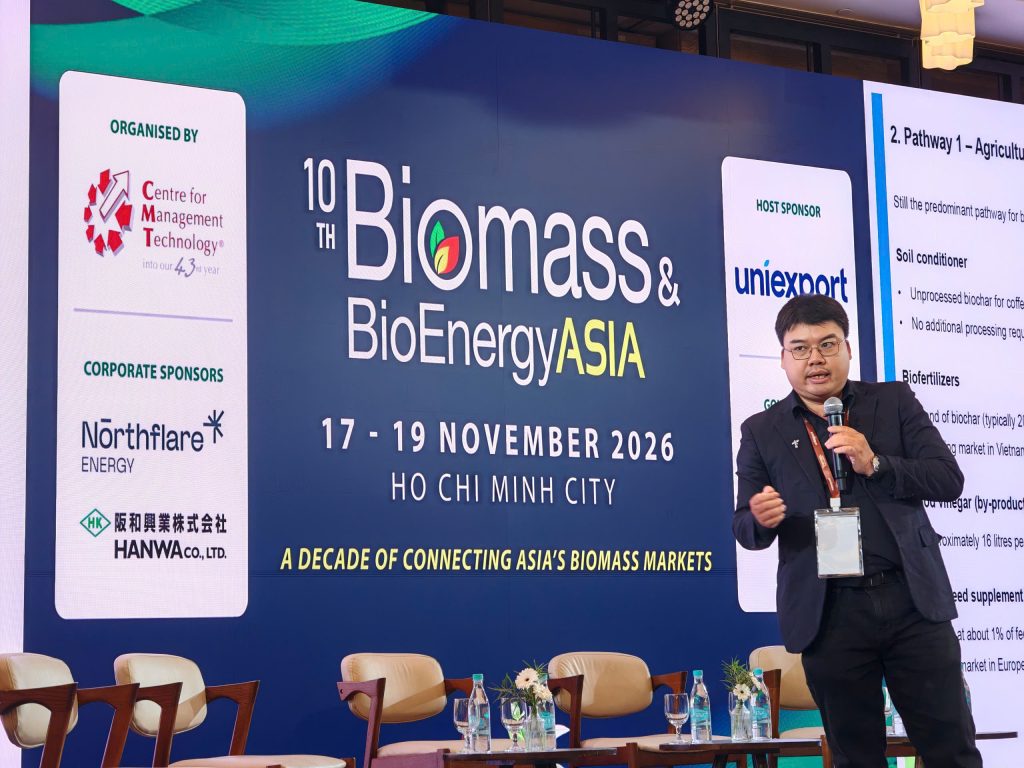
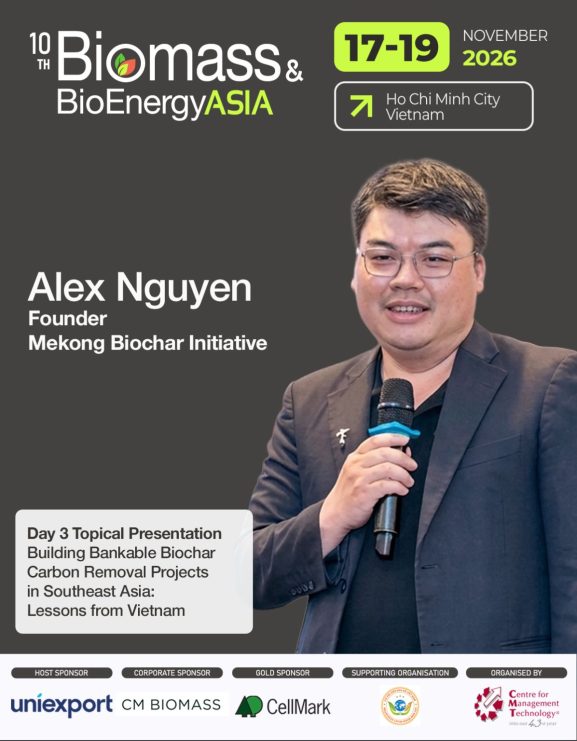
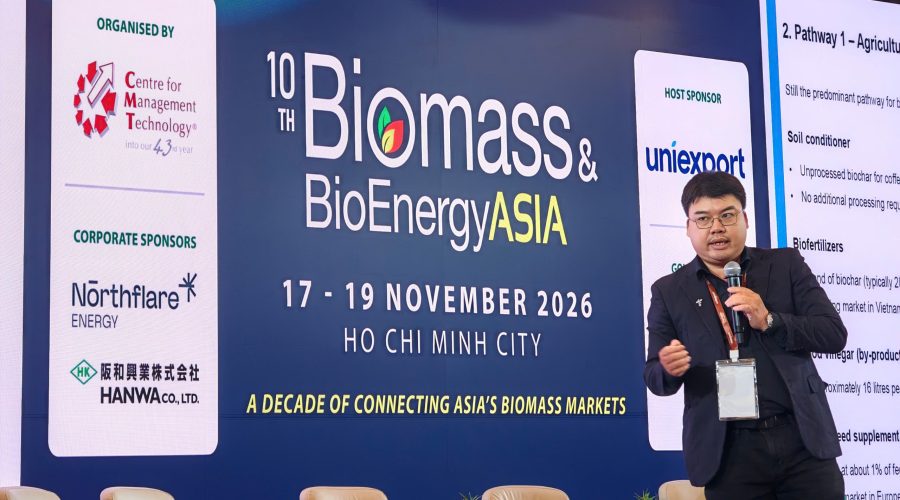
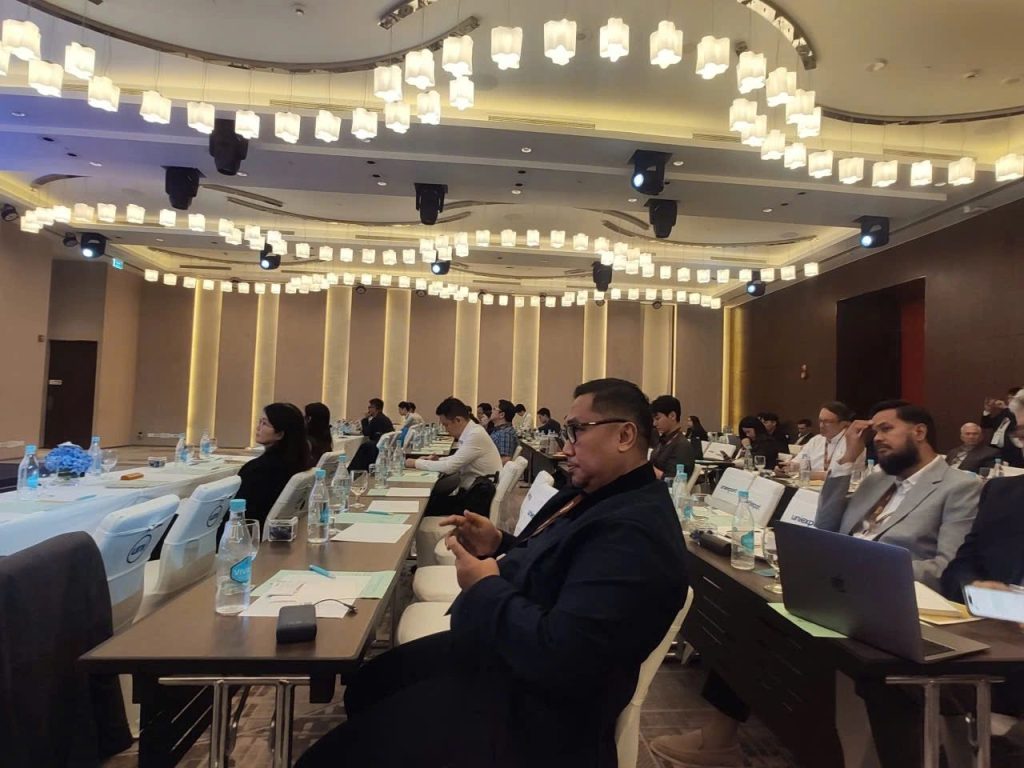
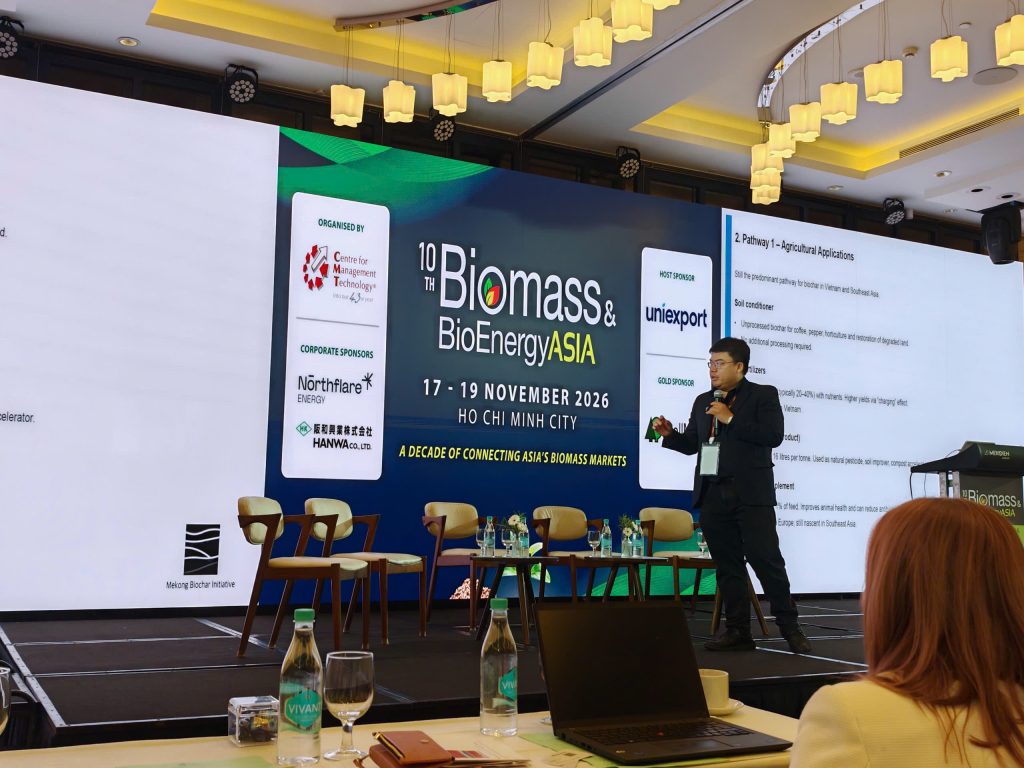
At the 10th Biomass & Bioenergy Asia Conference, held from 17–19 November 2026 at Le Méridien Saigon, Ho Chi Minh City, Vietnam, Mr. Nguyen Dinh Quyen (Alex Nguyen) – Founder of Mekong Biochar Initiative (MBI) and ESG Education & Business – delivered a presentation entitled:
“Building Bankable Biochar Carbon Removal Projects in Southeast Asia: Lessons from Vietnam.”
The presentation shared practical experience in developing Biochar projects, transforming agricultural and forestry residues into commercially valuable products, and integrating carbon removal activities and carbon credits into sustainable business models.
Biochar Is More Than Just a Carbon Credit Opportunity
One of the key messages of the presentation was that Biochar should be recognized as a commercially valuable product with real-world applications, rather than being viewed solely as a means of generating carbon credits.
The presentation examined four major commercialization pathways for Biochar:
- Agriculture: Applications as a soil amendment, bio-organic fertilizer, nutrient-enriched soil conditioner, and input for regenerative agriculture.
- Water and Wastewater Treatment: Applications as an adsorbent and filtration material for drinking water, industrial wastewater treatment, and water quality improvement in aquaculture.
- Activated Carbon Production: Development of higher-value products for water purification, cosmetics, air filtration, and specialized industrial applications.
- Carbon Finance: Development of carbon removal credits under appropriate international standards and methodologies.
According to Alex Nguyen, agricultural applications currently represent the most commercially accessible market opportunity for Biochar in Vietnam. Meanwhile, water treatment and aquaculture offer promising additional markets. Activated carbon production, however, requires careful consideration of technology requirements, capital investment, and product quality specifications before implementation.
In particular, a dual-revenue model – combining revenue from Biochar, fertilizers, and other commercial products with carbon credit revenue following successful certification – was highlighted as an important approach to improving project financial performance.
From Biomass Residues to Bankable Commercial Projects
The presentation also identified several major barriers to Biochar industry development in Vietnam and Southeast Asia, including inconsistent product quality, unsuitable production technologies, logistics costs, limited market awareness, technical capacity constraints, and carbon certification requirements.
According to Alex Nguyen, a Biochar project seeking to attract private investment must be developed through an integrated value chain, covering both feedstock supply and final product markets.
Key requirements include:
- Reliable biomass feedstock sources with traceability and cost control.
- Pyrolysis technologies appropriate for different feedstock types and production capacities.
- Biochar quality control and standardized operating procedures.
- Established product markets and commercially viable offtake agreements.
- Robust MRV systems, emissions data management, and carbon credit project documentation.
- Transparent financial models demonstrating cash flow potential and investment returns.
These elements are essential for transitioning Biochar projects from pilot operations to commercial-scale production. Simply increasing equipment capacity without demonstrating operational efficiency and market demand is not a sustainable approach to industry development.
MBI Presents Its Biochar Project Development Pipeline in Vietnam
As part of its presentation on implementation capabilities, Mekong Biochar Initiative introduced a phased project development model integrating technology, engineering consultancy, carbon project development, and investment partnerships.
Three representative projects were highlighted:
Vung Tau – Wood Residue-Based Biochar Project
The project is currently in commercial operation, processing approximately 10 tonnes of wood chips per day using small-scale, modular pyrolysis systems developed by the MBI team.
An Giang – Rice Husk-Based Biochar Project
The project is currently under construction, with a planned feedstock processing capacity of approximately 60 tonnes per day. Commercial operations are expected to commence in May 2027.
Quang Ngai – Acacia Wood-Based Biochar Project
The project is undergoing technical preparation and implementation planning to convert an existing wood chip processing facility into a Biochar production and carbon removal project, with a projected feedstock processing capacity of approximately 120 tonnes per day.
These projects provide practical platforms for testing and refining operational models across different feedstock types, equipment scales, and plant configurations.
The objective is to establish replicable technical standards, quality management procedures, feedstock traceability systems, and MRV frameworks that can support future project expansion.
Positioning Vietnam as a Biochar Development Hub for the Mekong Region
In its long-term strategy, MBI aims to position Vietnam as the central hub for Biochar technology development, operations, and commercialization, while progressively expanding its model into Cambodia, Laos, Thailand, and other countries across the Mekong region.
Rather than focusing exclusively on equipment procurement or carbon credit trading, MBI seeks to develop an integrated Biochar ecosystem involving technology providers, biomass processing companies, agricultural cooperatives, investors, financial institutions, carbon project developers, and end-product customers.
According to the development roadmap presented at the conference, MBI has established the following indicative targets for its three-year development phase:
- At least 500,000 tonnes of agricultural and forestry residues per year brought into productive and value-added utilization.
- At least 200,000 tCO₂e in potential carbon removals and emission reductions developed or incorporated into its carbon project portfolio.
- Mobilization of at least USD 5 million in private investment for equipment, production facilities, and project expansion.
These figures represent forward-looking development targets, rather than achievements already realized.
Building Technical and Commercial Foundations Before Scaling Up
Sharing MBI’s strategic direction, Alex Nguyen emphasized that Biochar industry development requires a long-term approach in which technology, product quality, economic performance, and market development must progress together.
Carbon credit development should be integrated into project design from the beginning. However, carbon revenue should not be the sole basis for investment decisions.
A bankable project must demonstrate the commercial viability of its production operations, the marketability of its products, and the sustainability of its long-term cash flows.
Through its practical projects in Vietnam, MBI aims to contribute to the development of domestic technological capabilities, strengthen biomass value chains, and establish scalable Biochar business models across Southeast Asia.
“Our ambition is not simply to develop Biochar production plants or carbon credit projects. Our long-term objective is to build a Biochar ecosystem supported by strong technical foundations, real market demand, and commercially sustainable operations. Vietnam has the potential to become a regional hub for developing and scaling this model across the Mekong region.”
— Mr. Nguyen Dinh Quyen (Alex Nguyen)
Founder, Mekong Biochar Initiative (MBI)
Founder, ESG Education & Business
Watch the conference presentation:
Building Bankable Biochar Carbon Removal Projects in Southeast Asia: Lessons from Vietnam
Contact Information
Mekong Biochar Initiative (MBI)
Website: https://mekongbiochar.com
Email: office@mekongbiochar.com