Biochar Carbon Removal: The Next Frontier of Climate Action
From Agricultural Residues to Long-Term Carbon Removal
The global transition toward net-zero emissions is creating a new and rapidly evolving market: Carbon Dioxide Removal (CDR).
While emissions reduction remains the first priority, the world will also need solutions capable of removing carbon dioxide that has already accumulated in the atmosphere or offsetting residual emissions that are difficult to eliminate completely.
Among the different Carbon Removal pathways emerging today, Biochar Carbon Removal is attracting increasing attention.
Biochar sits at a unique intersection between agriculture, circular economy, climate technology, carbon markets, and green finance. It can transform agricultural residues and other biomass into a stable carbon-rich material while potentially generating additional value through soil improvement, agricultural applications, and carbon removal credits.
However, the future of Biochar will not be determined simply by how much Biochar can be produced.
The more important question is:
How much verifiable, durable and high-integrity carbon removal can a Biochar project actually deliver?
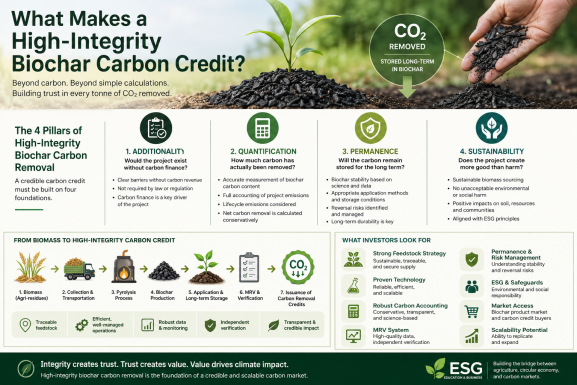
A major 2026 report from the University of Bristol and CO2RE, Biochar Carbon Removal Standards: A comparative assessment of the EU CRCF, ICVCM and Article 6.4, provides an important framework for answering this question. The report compares the EU Carbon Removal and Carbon Farming Regulation (CRCF) with the Integrity Council for the Voluntary Carbon Market (ICVCM) Core Carbon Principles and Article 6.4 of the Paris Agreement. It assesses Biochar Carbon Removal across four fundamental dimensions: additionality, quantification, permanence, and sustainability.
For Biochar developers, investors and agricultural businesses, these principles are becoming increasingly important.
What Is Biochar Carbon Removal?
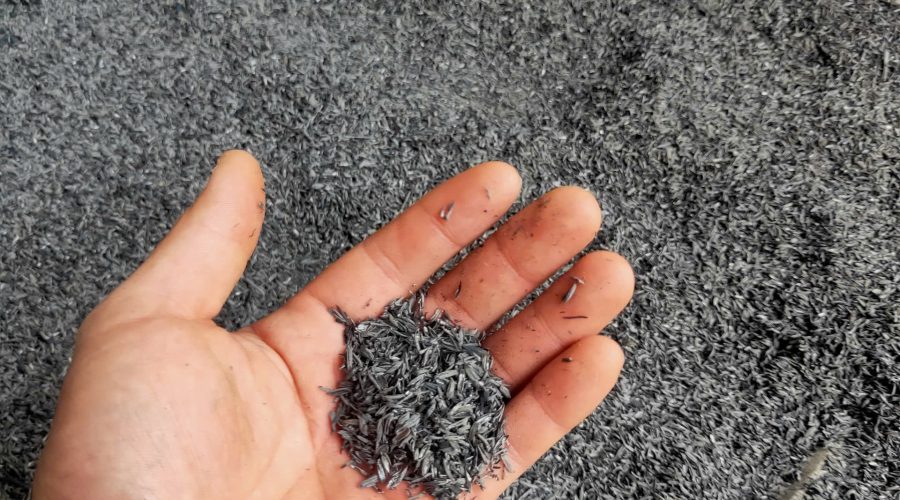
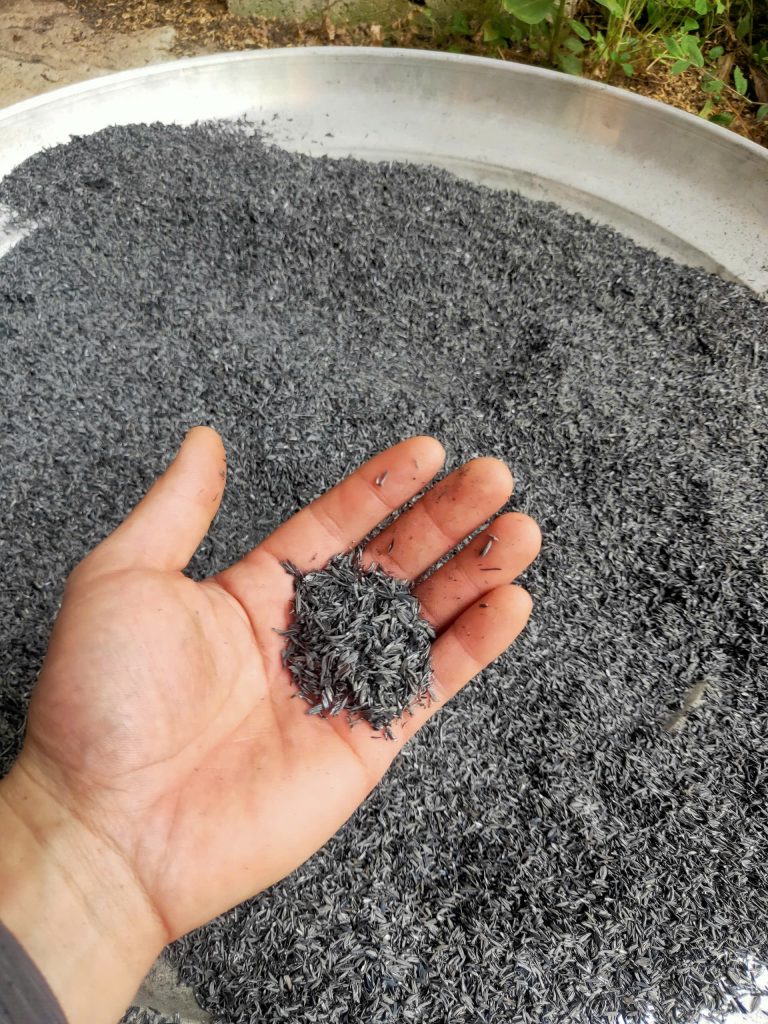
Biochar is a carbon-rich material produced by heating biomass under controlled conditions, typically through a process known as pyrolysis.
The feedstock can include a wide range of biomass materials, such as:
- Rice husks
- Coconut shells
- Coffee residues
- Sugarcane bagasse
- Cashew shells
- Wood residues
- Sawdust
- Other agricultural and forestry residues
Instead of allowing biomass to decompose or be burned without capturing its carbon, pyrolysis converts part of the biomass carbon into a more stable form.
When appropriately produced and used, Biochar can be incorporated into soils or used in other applications where a portion of its carbon remains stored for extended periods.
This creates an important distinction.
A conventional biomass project may focus primarily on energy production.
A Biochar Carbon Removal project focuses on carbon storage and removal, potentially alongside agricultural, environmental and commercial benefits.
The resulting value chain can therefore look like:
Agricultural Residues → Pyrolysis → Biochar → Carbon Storage → Carbon Removal → Carbon Credits
But this simplified diagram hides a much more complex reality.
A tonne of biomass does not automatically equal a tonne of CO₂ removed.
The carbon removal must be measured, calculated, verified and demonstrated to be additional and sufficiently durable.
This is where the emerging carbon removal standards become critical.
Why Biochar Is Becoming Important in the Carbon Removal Market
The development of Biochar Carbon Removal is taking place within a broader expansion of the CDR market.
The University of Bristol report notes the rapid growth of the voluntary carbon removal market and the increasing need for internationally recognised standards capable of distinguishing high-integrity carbon removal from lower-quality activities. The EU has developed the CRCF framework to cover several permanent carbon removal pathways, including direct air carbon capture and storage, biomass with carbon capture and storage, and Biochar.
Biochar has several characteristics that make it particularly interesting.
1. Abundant feedstock
Agriculture generates enormous quantities of residues every year.
In countries such as Vietnam, where agriculture represents a major economic sector, large volumes of rice husks, coconut residues, coffee residues, sugarcane bagasse, cashew shells and other biomass are generated across distributed production systems.
These materials are often underutilised.
A well-designed Biochar system can potentially convert this underutilised biomass into a valuable resource.
2. Multiple value streams
Biochar does not necessarily depend on carbon credits alone.
Depending on the feedstock, technology and application, a project may generate revenue from:
Biochar products + agricultural applications + energy or heat recovery + carbon removal credits
This diversified value proposition can potentially improve project economics.
3. Integration with agriculture
Unlike some engineered Carbon Removal technologies, Biochar can be directly connected to agricultural systems.
Biochar may contribute to soil improvement, nutrient management and water retention under appropriate conditions.
This creates an opportunity to connect:
Carbon Removal + Regenerative Agriculture + Circular Economy
4. Potential long-term carbon storage
A portion of the carbon in Biochar can remain stable for long periods.
However, permanence should never simply be assumed.
The actual durability of carbon storage depends on the properties of the Biochar, production conditions, application pathway and environmental conditions.
This is why permanence is one of the four central integrity pillars identified by the Bristol report.
Biochar Is Not Automatically a Carbon Credit
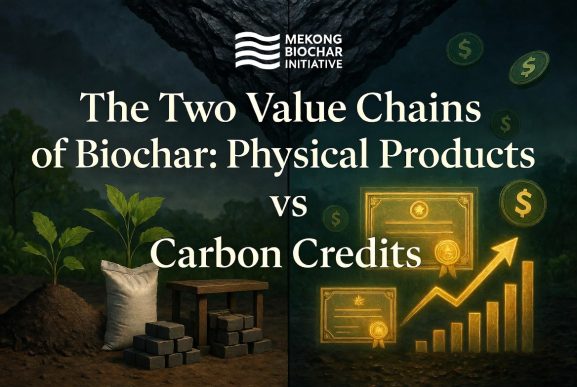
One of the most important concepts for the emerging Biochar industry is that producing Biochar and producing a high-integrity Carbon Removal Credit are two different things.
A company can manufacture Biochar without generating carbon credits.
To generate credible Carbon Removal Credits, the project needs to demonstrate that its activity results in genuine net carbon removal compared with an appropriate baseline and that the removal meets the requirements of the relevant carbon standard.
This requires a much more comprehensive project architecture.
A serious Biochar Carbon Removal project should consider at least:
Feedstock sourcing → Baseline scenario → Production technology → Energy consumption → Process emissions → Biochar carbon content → Stable carbon fraction → Application or storage pathway → Leakage → Reversal risk → Monitoring, Reporting and Verification → Carbon Credit issuance
This is why Biochar Carbon Removal should be treated as a carbon project, rather than simply a biomass processing business.
The Four Pillars of High-Integrity Biochar Carbon Removal
The Bristol report provides a particularly useful framework by assessing four pillars that determine carbon credit integrity:
1. Additionality
Would the project happen without carbon finance?
If a Biochar project would have been built and operated anyway, the climate benefit attributed to carbon finance may not represent additional mitigation.
The report identifies a significant difference between the EU CRCF approach and the approaches of ICVCM and Article 6.4. The CRCF’s Biochar methodology uses a standardised zero-baseline approach, under which Biochar activities generating net carbon removal are deemed additional. However, the report notes that this approach does not include the same legal compliance checks, prior consideration assessments, financial tests and barrier tests used by ICVCM and Article 6.4.
This creates an important integrity question, particularly for Biochar used in agriculture.
2. Quantification
How much carbon has actually been removed?
Carbon removal cannot be calculated simply by measuring the carbon contained in the final Biochar.
The project must account for emissions throughout the relevant lifecycle.
This can include:
- Feedstock collection
- Transportation
- Drying
- Pyrolysis
- Energy consumption
- Process emissions
- Biochar handling
- Application
- Potential downstream emissions
The result is a net Carbon Removal, not simply a gross carbon content measurement.
This is why Life Cycle Assessment and robust greenhouse gas accounting are becoming increasingly important in Biochar project development.
3. Permanence
How long will the carbon remain stored?
Carbon removal has greater climate value when storage is durable.
Biochar can provide relatively long-term carbon storage, but the actual permanence depends on multiple factors.
The Bristol report highlights the need to consider not only carbon stability but also potential reversal risks — situations where stored carbon could return to the atmosphere.
This means Biochar projects need to consider both:
Carbon stability + reversal risk management.
4. Sustainability
Does the project create unintended environmental or social harm?
A Carbon Removal project cannot be considered truly sustainable if it removes carbon while creating significant damage elsewhere.
This means Biochar projects should consider:
Soil + Water + Biodiversity + Land Use + Feedstock Competition + Labour + Communities + Human Rights
The Bristol assessment explicitly examines both environmental and social sustainability as part of its integrity framework.
The Feedstock Question: Waste or Valuable Resource?
For Biochar developers, one of the most important questions may be the simplest:
Where does the biomass come from?
Consider rice husk.
A rice mill may treat rice husk as a waste or low-value residue. But once demand for Biochar increases, that same rice husk becomes a valuable feedstock.
This creates an economic opportunity — but also a potential sustainability challenge.
The correct question is therefore not simply:
“Is rice husk agricultural waste?”
It is:
“What is the baseline use of this rice husk, and what happens when the Biochar project takes it?”
The same question applies to:
- Coffee husks
- Coconut shells
- Bagasse
- Cashew shells
- Sawdust
- Other biomass residues
If biomass is diverted from another economically or environmentally valuable application, the project needs to consider the consequences.
This is where feedstock traceability, supply-chain due diligence and leakage assessment become important.
For Vietnam and Southeast Asia, this issue will become increasingly significant as Biochar projects move from small-scale agricultural applications to industrial-scale production.
Biochar and the Circular Economy
The strongest argument for Biochar may be that it connects several economic systems that are normally treated separately.
Agricultural production generates biomass residues.
The circular economy asks how those residues can be reused.
Biochar technology converts part of that biomass into a stable carbon-rich product.
Agriculture can potentially use the resulting Biochar.
Carbon markets can potentially recognise the durable carbon storage.
Green finance can potentially provide capital for project development.
The result is a circular value chain:
Agriculture → Biomass Residues → Biochar → Soil & Products → Carbon Removal → Investment
This is fundamentally different from a traditional waste-management model.
Instead of asking:
How do we dispose of agricultural residues?
we can ask:
How do we convert agricultural residues into productive, measurable and investable assets?
This shift in thinking is central to the development of a scalable Biochar economy.
Why Vietnam Has a Strategic Opportunity
Vietnam has several characteristics that could support the development of a Biochar and Carbon Removal industry.
The country has:
- A large agricultural sector
- Significant volumes of biomass residues
- Major rice production
- Strong coconut and coffee value chains
- Sugarcane production
- Forestry and wood-processing industries
- Growing interest in circular economy models
- Increasing attention to carbon markets and climate finance
This creates a potentially strong foundation for distributed Biochar projects.
For example, the Mekong Delta has enormous quantities of agricultural residues generated through rice production and other agricultural activities.
Instead of transporting low-value biomass over long distances, project developers can potentially build regional processing hubs close to feedstock sources.
This can create a new model:
Local Feedstock → Local Processing → Local Biochar → Local Agriculture → Global Carbon Market
However, scale must be accompanied by integrity.
The larger the industry becomes, the more important it will be to ensure that feedstock sourcing, emissions accounting, carbon storage and social safeguards are properly managed.
From Biochar Plants to Bankable Carbon Removal Projects
The next stage of Biochar development will require a transition from technology-led projects to investment-ready carbon projects.
A bankable project needs more than a pyrolysis machine.
It needs:
A reliable feedstock strategy
Long-term access to sustainable biomass.
Proven technology
Reliable production performance and appropriate energy management.
Strong financial modelling
Capital expenditure, operating costs, Biochar revenue and carbon revenue need to be modelled realistically.
Carbon accounting
The project must quantify net removals using a credible methodology.
MRV
Data collection and verification need to be built into the project from the beginning.
ESG management
Environmental and social risks need to be identified and managed.
Market strategy
The project needs to understand both the Biochar product market and the Carbon Removal market.
Certification pathway
The appropriate standard, methodology and verification structure need to be identified before major investment decisions are made.
This is the foundation of what we can call a bankable Biochar Carbon Removal project.
The Future: Biochar × Agriculture × Carbon × Finance
Biochar has the potential to become much more than a climate technology.
It can become an economic bridge between agriculture and the carbon economy.
Imagine a future in which agricultural residues are no longer treated simply as waste.
A rice mill produces rice husk.
The husk becomes feedstock for a Biochar facility.
The Biochar is processed into agricultural products.
Farmers use it within appropriate regenerative agriculture systems.
Carbon storage is measured and verified.
Verified Carbon Removal Credits are generated where the project meets the applicable standard.
Revenue flows back into the project.
Investment finances the next facility.
The model is replicated across agricultural regions.
This is how an individual Biochar project can potentially become an industry.
But achieving this vision requires discipline.
The future of Biochar cannot be built solely on the assumption that “Biochar is good for the climate.”
The industry must prove it.
It must prove:
How much carbon is removed.
Where the carbon comes from.
How long it is stored.
What emissions occur along the way.
Whether the removal is additional.
Whether the feedstock is sustainable.
Whether communities benefit.
Whether the environmental claims can be independently verified.
That is the difference between a Biochar product and a high-integrity Carbon Removal project.
Conclusion: From Agricultural Residues to Climate Assets
The emergence of Biochar Carbon Removal represents an important opportunity to connect several of the world’s most urgent priorities:
Climate Action.
Circular Economy.
Regenerative Agriculture.
Green Finance.
Carbon Markets.
The 2026 University of Bristol/CO2RE assessment demonstrates why the next phase of Biochar development must focus on integrity, standardisation and credible measurement, rather than simply increasing production capacity. The report’s assessment of EU CRCF against ICVCM and Article 6.4 shows that important questions remain around additionality, quantification, permanence, leakage and sustainability.
For countries such as Vietnam, this creates both an opportunity and a responsibility.
The opportunity is enormous: abundant agricultural residues can potentially become valuable resources for Biochar, regenerative agriculture and Carbon Removal.
The responsibility is equally important: projects must be designed from the beginning to deliver real, measurable and verifiable climate impact.
At ESG Education & Business, we believe the future of Biochar should not be defined simply by the number of plants built or tonnes of Biochar produced.
It should be defined by the quality of the projects we develop and the value they create for farmers, investors, businesses, communities and the climate.
This is the direction behind initiatives such as the Mekong Biochar Initiative and Carbon Green: connecting agricultural residues with technology, investment, regenerative agriculture and high-integrity Carbon Removal.
From agricultural residues to valuable products.
From waste to productive assets.
From Biochar to Carbon Removal.
From individual projects to a scalable industry.
The Biochar economy is still being built.
The opportunity now is to build it right.
About the Research
This article is informed by Biochar Carbon Removal Standards: A comparative assessment of the EU CRCF, ICVCM and Article 6.4, published by Murali A. Thoppil, Joanna House, Evangelos Mouchos, Natasha Martirosian, Colin Snape, Catherine Price, Carol Morris, Leo Mercer and Nikki Brazzola through the University of Bristol/CO2RE in June 2026. The report assesses the integrity of Biochar Carbon Removal standards across additionality, quantification, permanence and environmental and social sustainability.
Reference: Thoppil, M. A., et al. (2026). Biochar Carbon Removal Standards: A comparative assessment of the EU CRCF, ICVCM and Article 6.4. CO2RE Research Report. DOI: 10.71706/d0ebc5c4-07d4-4d8f-a00d-26f7b3eafe00.