PYROLYSIS PROCESS AND BIOCHAR FORMATION
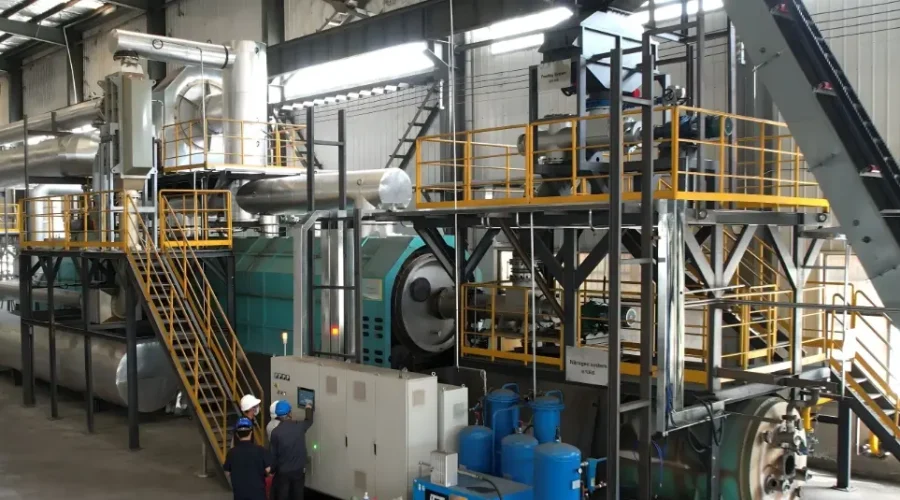
Pyrolysis is the thermal decomposition of biomass in the absence of oxygen (λ = 0). During this process, organic materials are converted into three main products: solid biochar, condensable liquids (commonly referred to as bio-oil or tar), and non-condensable gases such as carbon monoxide (CO), carbon dioxide (CO₂), hydrogen (H₂), methane (CH₄), and light hydrocarbons. The distribution of these products is strongly influenced by operating conditions, including temperature, heating rate, residence time, and the composition of the feedstock.
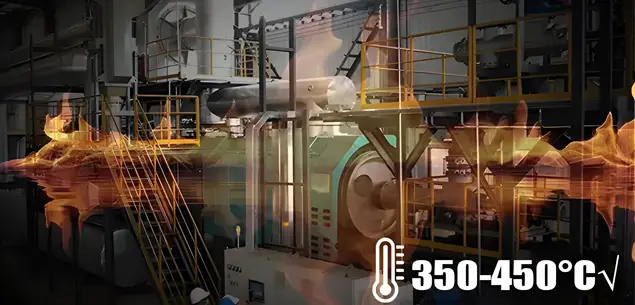
The pyrolysis process occurs through several overlapping stages. Initially, moisture is removed during the drying phase at temperatures below 150 °C. This is followed by devolatilization between approximately 200 °C and 500 °C, during which volatile compounds are released. At higher temperatures, secondary reactions occur between vapors and the remaining solid char. The decomposition behavior varies among the main structural components of biomass: hemicellulose decomposes between 230–300 °C, cellulose between 300–400 °C, and lignin over a broader range up to 600 °C. These differences result in variations in product yield and composition.
Pyrolysis processes are typically classified based on heating rate, temperature, and vapor residence time. Torrefaction, occurring at relatively low temperatures (230–290 °C) and low heating rates, is a mild thermal treatment that produces a solid product with improved energy density and grindability. However, the temperature range is generally insufficient to produce high-quality biochar with desirable properties such as high carbon content and large surface area.
| Process Type | Temperature (°C) | Heating Rate | Vapour Residence Time | Main Product | Key Characteristics |
|---|---|---|---|---|---|
| Torrefaction | 230 – 290 | Low | Minutes – Hours | Solid (Torrefied biomass) | Mild thermal treatment; improves energy density and grindability; not suitable for high-quality biochar |
| Slow Pyrolysis | 400 – 800 | Low | Minutes – Hours | Solid (Biochar) | Maximizes biochar yield; promotes carbonization; produces stable, aromatic carbon structure |
| Intermediate Pyrolysis | 450 – 650 | Medium | Seconds | Bio-oil + Gas | Balanced production of liquids and gases; moderate char yield |
| Fast Pyrolysis | 450 – 650 | High | Seconds | Bio-oil | Requires rapid heating and cooling; optimized for liquid fuel production |
| Flash Pyrolysis | 800 – 1000 | Very High | Milliseconds | Bio-oil | Extremely fast conversion; minimizes secondary reactions; requires finely ground feedstock |
Additional Comparison: Product Distribution (Typical)
| Process Type | Biochar Yield | Bio-oil Yield | Gas Yield |
|---|---|---|---|
| Slow Pyrolysis | 25 – 40% | 30 – 40% | 20 – 30% |
| Fast Pyrolysis | 10 – 20% | 60 – 75% | 10 – 20% |
| Flash Pyrolysis | <10% | Up to 75–80% | 10 – 20% |
Slow pyrolysis, conducted at temperatures between 400 °C and 800 °C with low heating rates and longer residence times, is the most commonly used method for biochar production. Under these conditions, biomass undergoes gradual carbonization, resulting in a solid product with high aromaticity and low volatile content. Typically, slow pyrolysis yields about 25–40% biochar by mass, while 30–40% is converted into liquid products and 20–30% into permanent gases. The interaction between evolving gases and solid material can also promote secondary reactions, further enhancing char formation.
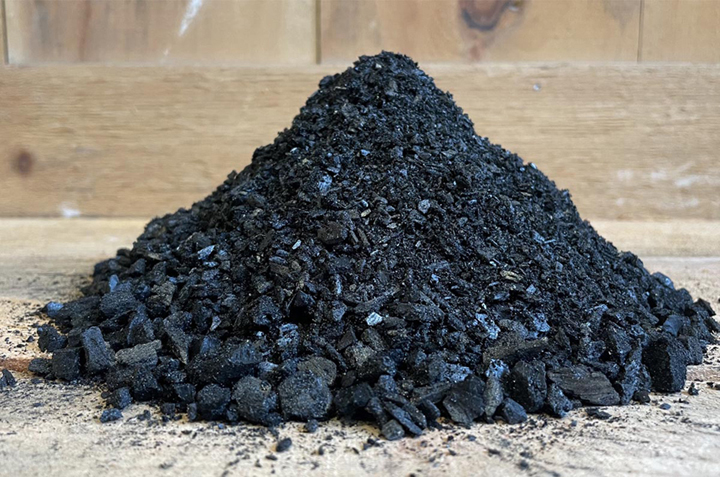
Temperature plays a critical role in determining the properties of biochar. As temperature increases, biomass undergoes structural breakdown and chemical rearrangement. Oxygen- and hydrogen-containing functional groups are progressively removed, leading to a higher relative carbon content. This devolatilization process also creates a highly porous structure, significantly increasing the surface area of the biochar. The remaining carbon atoms reorganize into stable aromatic structures, contributing to the long-term persistence of biochar in soil environments.
The liquid fraction, known as bio-oil, consists of a complex mixture of organic compounds such as phenols, acids, ketones, furans, and tars, along with a significant amount of water. Depending on its composition, bio-oil may exist as a single phase or separate into aqueous and organic phases. Due to its high oxygen content and chemical instability, upgrading bio-oil for material use can be technically challenging and costly. In many systems, the liquid and gaseous by-products are combusted to supply heat for the pyrolysis process itself. When dry, low-ash feedstocks such as wood are used, this energy recovery is often sufficient to sustain the process and provide additional usable heat. However, feedstocks with higher moisture or ash content may result in a less favorable energy balance.
In contrast to slow pyrolysis, fast and flash pyrolysis are designed to maximize liquid yields rather than solid char. These processes operate at higher heating rates and shorter vapor residence times, often requiring finely ground biomass to ensure rapid heat transfer. While they do produce some biochar as a by-product, the quantity and quality are typically lower, and the processes are not optimized for biochar production.
In summary, slow pyrolysis remains the preferred pathway for producing high-quality biochar due to its ability to maximize solid yield and create stable, carbon-rich material with desirable physical and chemical properties.